The short answer
Bali's wildlife is mostly small, quiet and easy to miss, with one big exception: the sea. On land you will see long-tailed macaques, geckos, water monitor lizards, fruit bats, egrets and kingfishers, and in the west, deer and wild cattle. The island's one endemic vertebrate, the critically endangered Bali starling, survives in West Bali National Park and on Nusa Penida. Under water, Bali is world class, with reef manta rays, turtles, spinner dolphins and, seasonally, the giant sunfish.
Very little here is dangerous if you use common sense, and the biggest animal risk for visitors is rabies from dogs and monkeys, not anything exotic.
Mammals: monkeys, deer and fruit bats
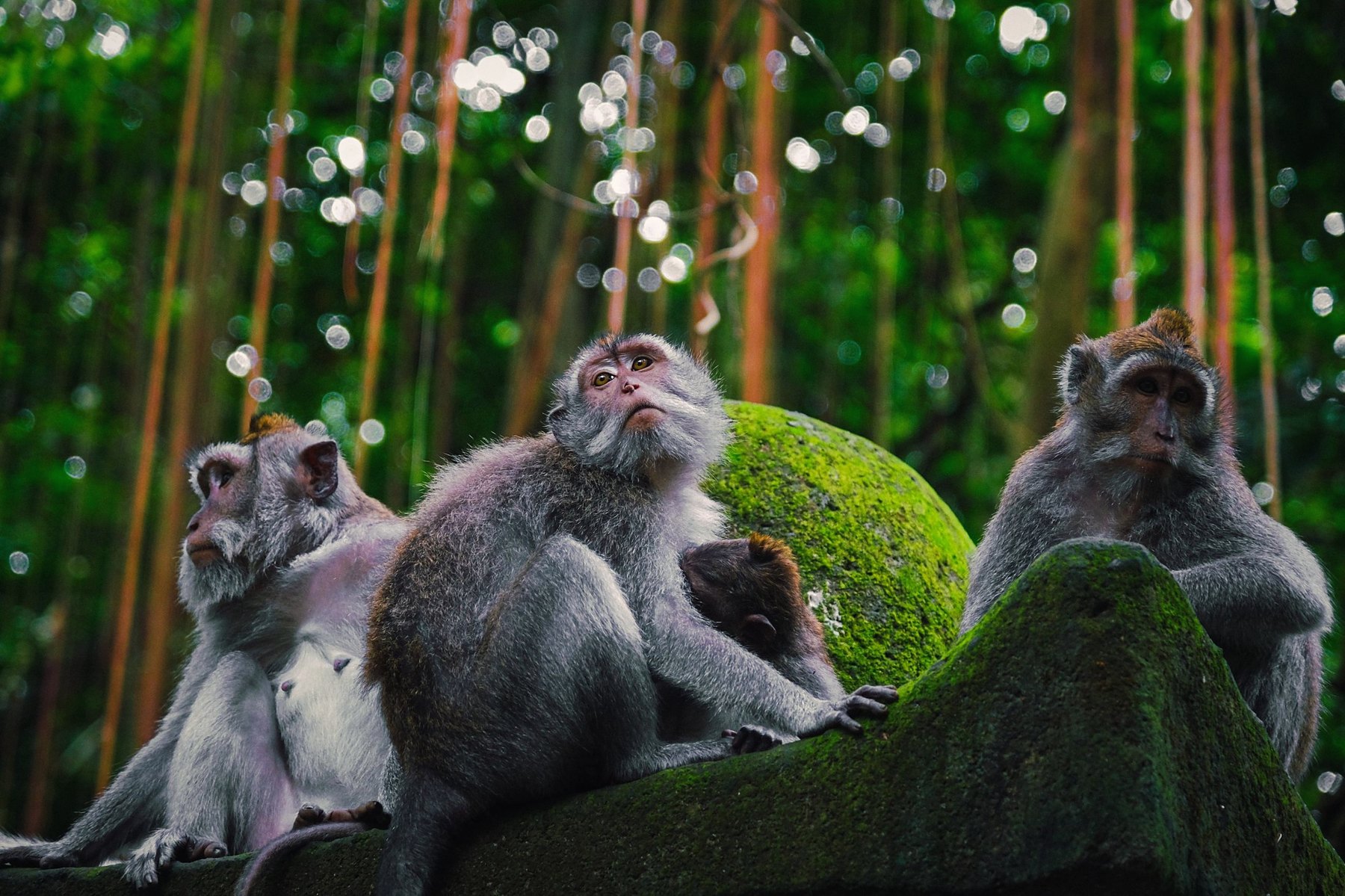
Long-tailed macaques are the animal everyone meets, in temple forests from Ubud to Uluwatu. They are wild, clever and sometimes light-fingered; our guide to monkeys in Bali covers how to visit them safely. In the forests of the west you may also see the Javan lutung, a black leaf monkey that is much shyer.
Deer live in West Bali National Park: the Javan rusa and the smaller Indian muntjac, or barking deer. Rusa also live on Menjangan Island, whose name means deer. The park also holds wild banteng, the ancestor of the golden-brown Bali cattle you see in rice fields, plus wild boar and leopard cats.
At dusk, look up for flying foxes, giant fruit bats that roost at Alas Kedaton and in West Bali. The common palm civet, or luwak, is a cat-sized night animal that lives in gardens and plantations, and it is the reason for one of Bali's most uncomfortable tourist traps (see below).
Birds: the Bali starling and beyond
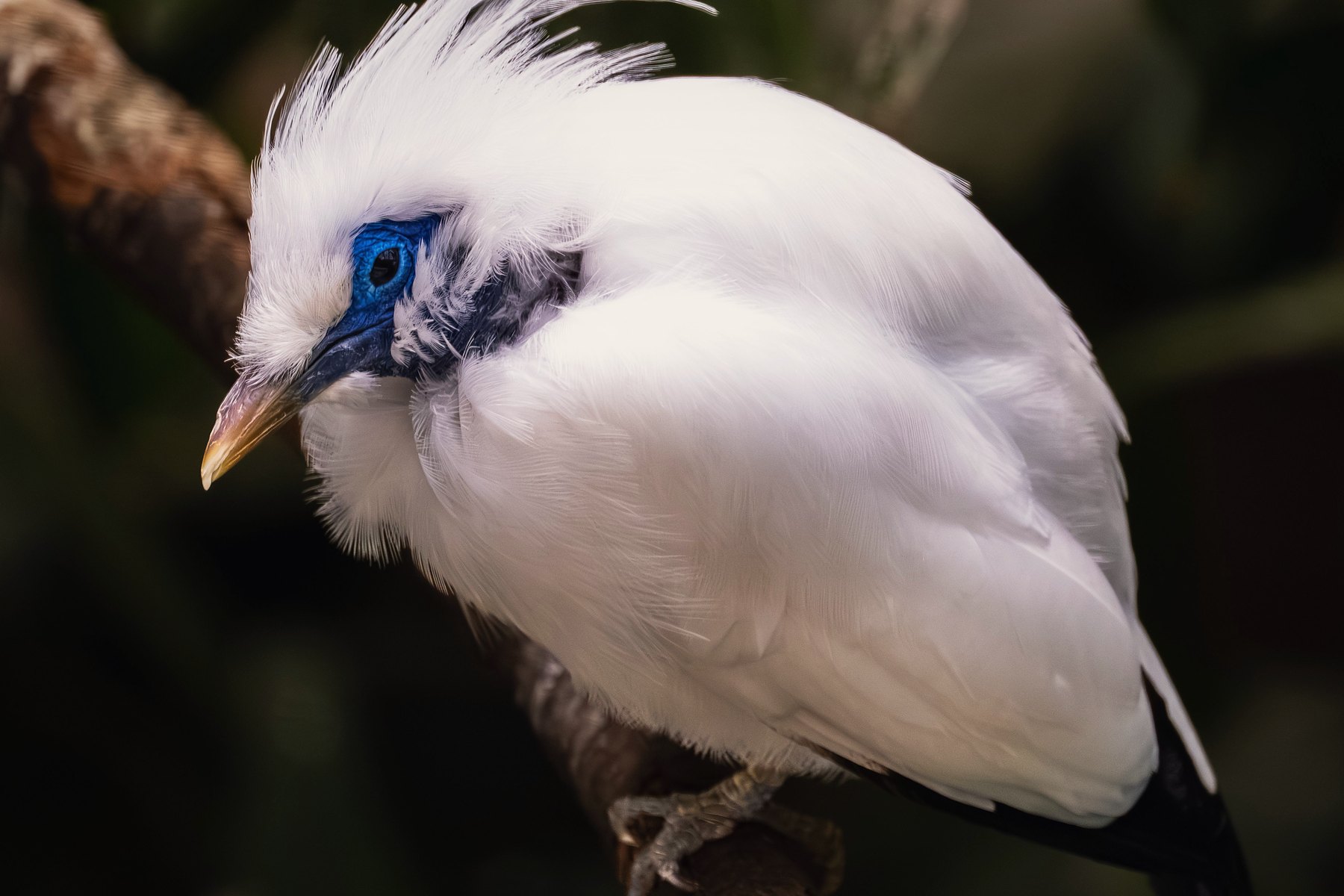
The Bali starling, or Bali myna, is snow-white with black wingtips and a vivid blue mask. Illegal trapping for the cage-bird trade drove it to the edge of extinction, and in 2020 fewer than 50 adults were thought to remain in the wild. Captive breeding, community bans on trapping and releases in West Bali, Nusa Penida and a village program near Payangan are keeping it alive. Learn more on our Bali starling page.
Elsewhere, look for white egrets returning to roost in the trees of Petulu village north of Ubud at sunset, Javan kingfishers over the rice terraces, and green junglefowl, the wild ancestor of the chicken, in the national park. Birdwatchers do well at the Bali Botanic Garden in Bedugul.
Reptiles: monitors, geckos and snakes
Water monitor lizards are Bali's largest land reptiles and can reach well over a meter and a half. They live in mangroves, rivers, golf courses and even rice fields in Canggu, and they are shy and harmless if left alone. The loud "to-kay" call at night comes from the tokay; see our guide to geckos in Bali. Bali has snakes too, a few of them venomous, but bites are rare.
Under water: the real show
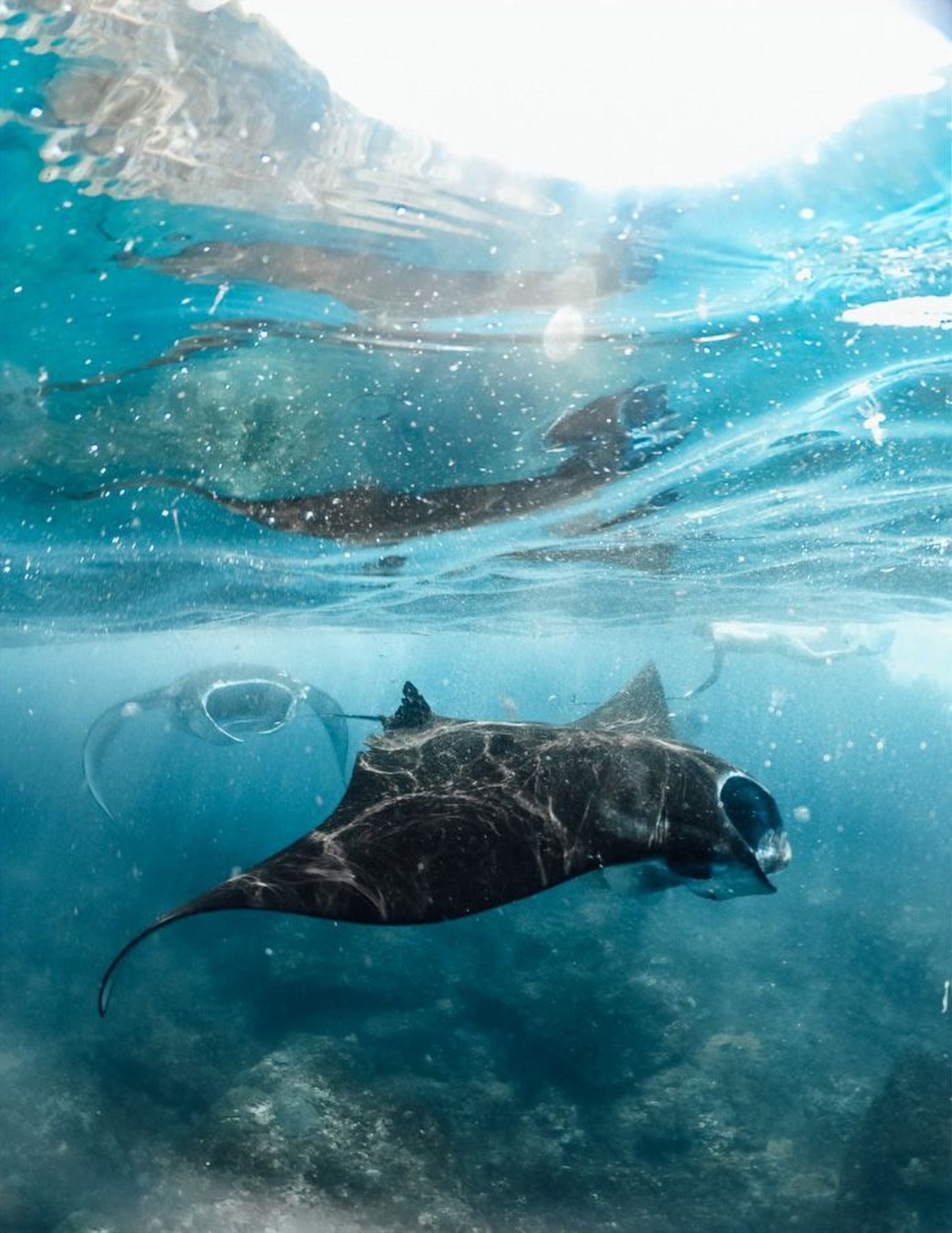
Nusa Penida's reef mantas are seen year-round, and from July to October the bump-head sunfish rises to cleaning stations at Crystal Bay (mantas and mola mola). Green and hawksbill turtles graze reefs at Amed, Menjangan and Nusa Penida, while olive ridleys nest on Kuta Beach (sea turtles). Spinner dolphins feed off the north coast every morning (dolphins).
Which animals are dangerous?
Honestly, very few, and almost all incidents follow touching, feeding or stepping on something. For the details, read our guides to snakes in Bali, sharks in Bali, spiders and insects in Bali and jellyfish and dangerous sea life. The one risk to take seriously is rabies, which has been present since 2008 and is carried mainly by dogs. Any bite or scratch from a dog or monkey needs same-day treatment; see rabies in Bali. Mosquitoes, which spread dengue, are a bigger everyday hazard than anything with teeth.
Myths: tigers, dragons and elephants
- There are no Komodo dragons in the wild in Bali. They live only on Komodo, Rinca and nearby islands off Flores, a short flight east. See our Komodo National Park guide.
- The Bali tiger is extinct. The smallest of all tigers, it was hunted out in the early 20th century. The last confirmed animal, a female, was shot at Sumbar Kima in West Bali on September 27, 1937, and none has been confirmed since. West Bali National Park was first created in 1941 partly to protect the tigers that were already gone.
- Elephants and orangutans are not native. Wild orangutans live only on Sumatra and Borneo, and the elephants in Bali's parks were brought from Sumatra.
Seeing wildlife ethically
A few choices make a real difference:
- Skip caged kopi luwak. Many plantation tours show civets kept in small cages and fed coffee cherries. A 2016 study of 16 tourist-oriented civet coffee plantations in Bali found 48 wild-caught civets kept in inadequate conditions. Wild-sourced luwak coffee exists, but you cannot verify it at a roadside stop, so the simplest answer is to drink ordinary Bali coffee.
- No riding. Avoid elephant rides and any venue that offers animal rides, hugs or selfies with wildlife.
- No captive "swim with" attractions. Watch turtles, dolphins and mantas in the wild instead.
- Keep your distance. About three meters from mantas and turtles, more from dolphins, and never feed monkeys.
- Hire local guides. A guided walk in West Bali National Park or a snorkel trip to Menjangan puts money into protecting the habitat.
Bali rewards patience. Sit still at the edge of a rice field at dawn or float quietly above a reef, and the island's wild side starts to show itself.
Frequently asked
What animals live in Bali?
Long-tailed macaques, deer, wild banteng, civets, fruit bats, water monitors, geckos and the endangered Bali starling on land, plus manta rays, turtles and dolphins in the sea.
Are there Komodo dragons in Bali?
Not in the wild. Komodo dragons live in Komodo National Park off Flores, about an hour's flight east of Bali.
Are there tigers in Bali?
No. The Bali tiger is extinct; the last confirmed animal was shot in West Bali in 1937.
Is kopi luwak ethical?
Usually not. Most civet coffee sold to tourists in Bali comes from caged, wild-caught civets kept in poor conditions.

BALI 2026
The complete island guide: regions, temples, beaches, getting around, what to avoid and how to plan the perfect trip.

100 Facts About Bali
Quick, surprising facts about the island's nature, people, history and traditions.