The short answer
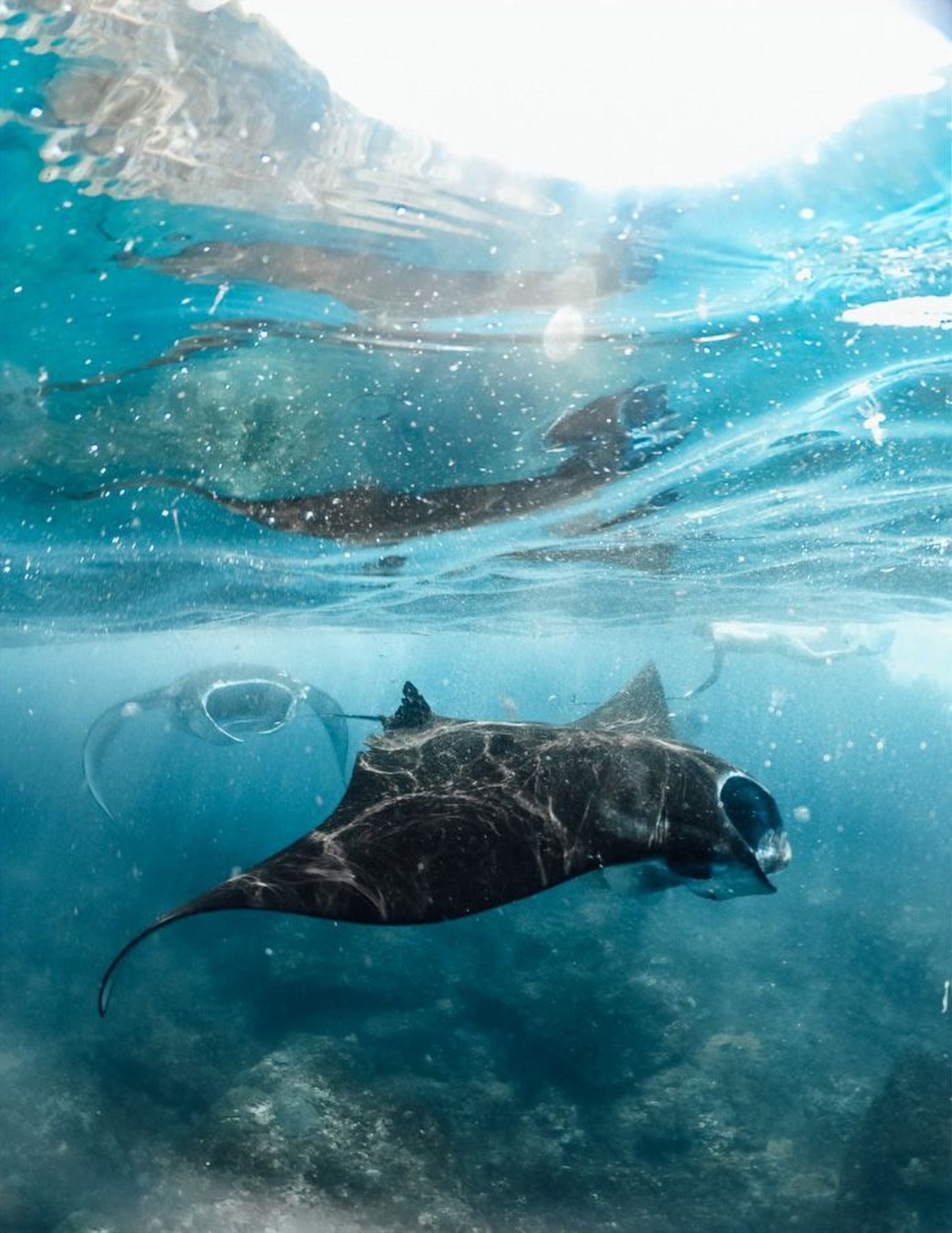
To see manta rays in Bali, head to Nusa Penida, the big island southeast of the mainland. Reef mantas are seen year-round at two sites: Manta Point on the south coast and Manta Bay on the west coast. Both can be snorkeled or dived, and sightings are likely on most days. A snorkel trip from Nusa Penida costs from around IDR 250,000 (about USD 15) per person.
The mola mola, or oceanic sunfish, is a seasonal and much harder prize. It appears at Crystal Bay and other deep sites around Nusa Penida and Nusa Lembongan mainly from July to October, usually at 20 to 40 meters, in cold water and strong currents. It is a diver's fish, and an experienced diver's at that.
Manta Point and Manta Bay: what is the difference
The two sites are about 12 km apart and they serve different purposes for the mantas. Research by the Marine Megafauna Foundation and Murdoch University, which identified 624 individual reef mantas around Nusa Penida over six years, found that Manta Bay is used mostly by young males feeding on plankton, some only 1.5 meters across. That makes the area a likely nursery. Manta Point is where mature adults come to be cleaned by small fish, to socialize and to court, with mating activity peaking around May.
In practice, Manta Bay is more sheltered and is the site most snorkel boats use. Manta Point sits below limestone cliffs on the exposed south coast, where swell can be big and the water surges. Boats sometimes have to abandon it on rough days. When it works, watching an adult manta hover over a cleaning station four or five meters wide is one of the best wildlife encounters in Indonesia.
Snorkeling or diving with mantas
Snorkeling is the easiest way in. Shared trips from Nusa Penida or Nusa Lembongan usually combine a manta site with reef stops such as Gamat Bay and Crystal Bay, last two to three hours and cost around IDR 250,000 per person, or roughly IDR 700,000 for a private boat. Full-day packages from Sanur with fast boat and transfers cost more, often around IDR 1,000,000 or above. You will need to be comfortable in open water with waves, and you should always wear the life jacket or fins the crew provides.
Diving puts you below the surface chop and lets you kneel quietly beside a cleaning station while the mantas circle. Manta Point is usually dived as a shallow site but the surge can be strong, so most operators ask for some experience.
Expect company. Manta Bay and Manta Point are the most visited of Nusa Penida's dive sites, and boat numbers rose about 60 percent after 2012. Morning slots before the day-trippers arrive are noticeably calmer.
Mola mola season at Crystal Bay
From about July to October, the southeast monsoon pushes cold, deep water up against the reefs around Nusa Penida, and with it come the sunfish. They rise to cleaning stations on the reef edge, where bannerfish pick parasites off their skin. The fish seen here are mostly the southern or bump-head sunfish rather than the classic Mola mola, but everyone calls them mola. Adults can be taller than a diver.
Crystal Bay is the most famous site, with divers waiting near the second corner of the bay. Toyapakeh, Blue Corner off Nusa Lembongan, Ceningan Wall, Gamat Bay and Sental are also known for sightings. Even in season, nothing is guaranteed: one experienced local guide estimates around one dive in ten, or closer to one in three over a full day of three dives in good conditions. August and September tend to be the strongest months.
Currents, cold water and who should dive
Mola diving is not a casual dive, and people have died doing it. The key risks:
- Thermoclines. The water can drop suddenly from about 26°C to below 20°C, and colder still deeper down. A 5 mm wetsuit and a hood are sensible.
- Downcurrents. Sites such as Crystal Bay, Toyapakeh and Blue Corner can switch from calm to fierce, and downward currents can pull divers deeper fast.
- Depth. Most sightings are between 20 and 40 meters. A Discovery Dive limited to 12 meters is unlikely to see one.
Dive only with an established operator that briefs on currents, uses experienced local guides, and carries surface marker buoys. Advanced Open Water certification is the realistic minimum, and you should be comfortable with negative entries and reef hooks.
The code of conduct
Reef mantas are protected in Indonesia, and Nusa Penida has been a marine protected area since 2014, but behavior rules underwater are voluntary. Follow the Manta Trust's widely used guidelines anyway:
- Enter the water quietly, no closer than about 10 meters to a manta, and keep fins below the surface.
- Stay at least 3 meters away. Stay still and let the manta choose to come closer.
- Never chase, touch or ride a manta, and never block its path.
- Divers should stay low and to the side of a cleaning station, not on top of it.
- No flash photography.
The same goes for sunfish. Stay behind and above your guide, keep your distance, and never cut off the fish's route to open water. If it sinks away, the encounter is over. Touching either animal damages the protective mucus on its skin.
Planning: when, from where, and fees
Mantas can be seen in any month, though the dry season from about April to November usually brings calmer seas. For mola, plan for July to October. Staying a night or two on Nusa Penida or Nusa Lembongan gives you early, uncrowded slots; see our Nusa Penida day trip guide for boats from Sanur. Since 2023, Klungkung regency has charged a marine conservation fee for snorkelers and divers in the Nusa Penida waters, set at IDR 100,000 when it was introduced. It is usually collected through your operator, so check whether it is included.
Frequently asked
Can you see manta rays in Bali all year?
Yes. Reef mantas live around Nusa Penida year-round and are seen on most days at Manta Point and Manta Bay, though rough seas can cancel trips.
When is mola mola season in Bali?
Mainly July to October, when cold upwelling brings sunfish up to cleaning stations at sites like Crystal Bay. August and September are often the best months.
Can you snorkel with manta rays in Nusa Penida?
Yes. Shared snorkel trips to Manta Bay or Manta Point start around IDR 250,000 per person from Nusa Penida. You need to be comfortable in open water with waves.
Is diving Crystal Bay dangerous?
It can be. Strong currents, downcurrents and sudden cold thermoclines make mola dives suitable for experienced divers with established operators and local guides.

BALI 2026
The complete island guide: regions, temples, beaches, getting around, what to avoid and how to plan the perfect trip.

101 Things to Do in Bali
A bucket list of 101 experiences across the island, from sunrise hikes to temple festivals.
Sources
- Nusa Penida manta ray nursery: tourists and fishers key to survival (Marine Megafauna Foundation)
- Bali's Mola Diving (DAN Alert Diver)
- Mola Mola in Nusa Penida (Dune Penida)
- Snorkeling tours from Nusa Penida (MyBaliTrips)
- Manta Trust code of conduct: 10-step guide
- Retribusi snorkeling dan diving Rp 100 ribu (detikBali)