The short answer
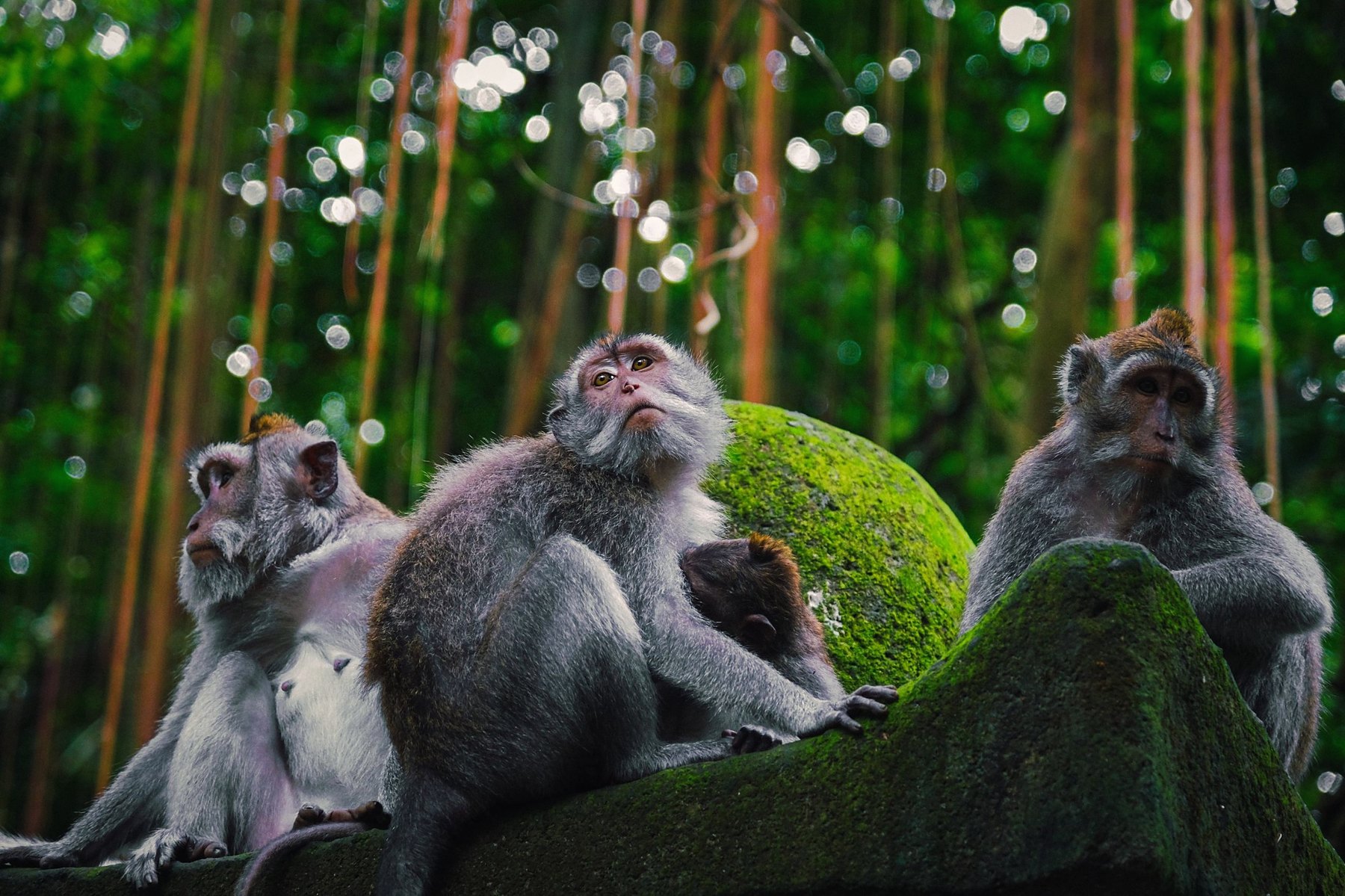
The monkeys you see all over Bali are long-tailed macaques, a wild species that lives in forests, temple grounds and cliffs across the island. The most famous places to see them are the Sacred Monkey Forest in Ubud, Uluwatu Temple on the Bukit peninsula, and the quieter temple forests of Sangeh and Alas Kedaton.
They are fascinating, mostly tolerant of people, and occasionally a real nuisance. Most problems come from food, loose belongings and people getting too close. And because rabies is present in Bali, any bite or scratch needs medical attention the same day, even if it looks minor.
Ubud Sacred Monkey Forest
At the bottom of Monkey Forest Road, this jungle sanctuary of banyan trees, mossy stone bridges and three temples is home to around 600 or more macaques living in five or six social groups. It is managed by the village of Padangtegal and studied by primatologists from Udayana University, so the monkeys are watched closely.
As of late 2025, tickets cost IDR 80,000 for adults on weekdays and IDR 100,000 at weekends (about USD 5 to 6), with lower prices for children aged 3 to 12. It is open daily from 9am to 5pm. Go at opening time, when it is cool and the monkeys are busy with breakfast rather than with you. Leave food, drinks, plastic bags and loose items in the lockers at the entrance.
Uluwatu: the temple of thieves
The macaques at Uluwatu have turned robbery into a business. They snatch sunglasses, hats, phones, sandals and even prescription glasses, then wait on a wall until a temple worker or tourist offers food in exchange. Researchers led by Jean-Baptiste Leca of the University of Lethbridge, working with Udayana University, studied the behavior over 273 days and published their findings in 2021. They found the monkeys learn it from each other over years, that older monkeys are better at it, and that they hold out for a better offer when they have grabbed something valuable. The scientists described it as a possible first example of a culturally maintained "token economy" in wild animals.
It is funny until it is your phone. At Uluwatu, take off your glasses and hat before you walk the clifftop path, carry nothing in your hands and zip everything into a bag worn in front. The temple fee for foreign visitors is roughly IDR 50,000; the sunset Kecak dance is a separate ticket. If something is taken, do not chase or grab; find a staff member, who will usually trade fruit for it.
Sangeh and Alas Kedaton
For a calmer experience, head to the temple forests west of Ubud.
Sangeh, about 30 minutes northwest of Ubud, is a 14-hectare grove of towering trees around the temple of Pura Bukit Sari. Entry has been around IDR 30,000 for foreign visitors, and it is open roughly 8am to 6pm.
Alas Kedaton, in Kukuh village near Marga in Tabanan regency, surrounds a centuries-old temple and is also known for its large fruit bats, which hang in the treetops and fly out at dusk. Entry for foreign visitors is around IDR 30,000, from 9am to 5pm. It makes an easy stop on the way to Taman Ayun or Tanah Lot.
At both, local guides will offer to accompany you for a tip. They know the troops well and can be genuinely useful for keeping overly curious monkeys at a distance.
How to avoid bites and theft
Nearly every monkey bite in Bali has a predictable cause. Avoid these and you will almost certainly be fine:
- Carry no food and no plastic bags. Macaques recognize the rustle of a snack wrapper from far away.
- Secure loose items. Glasses, hats, earrings, hair clips and phones in hand are the main targets.
- Do not feed or tease them. Feeding teaches monkeys that people are food dispensers, and that is where grabbing starts.
- Do not stare or bare your teeth. A wide smile looks like a threat to a macaque.
- Stay calm if one climbs on you. Stand still, let your arms hang, and it will usually jump off. Do not shake it off, scream or run.
- Keep children close and do not let them approach baby monkeys; mothers and nearby males react fast.
- Skip the shoulder-monkey photo. Letting a monkey sit on you for a picture puts you within easy biting distance.
If you are bitten or scratched
Do not wait to see whether it looks bad. Rabies has been present in Bali since 2008, and once symptoms appear it is almost always fatal. The good news is that it is preventable with prompt treatment.
- Wash the wound immediately with soap and running water for at least 15 minutes, then apply an antiseptic such as povidone-iodine.
- Get to a clinic or hospital the same day for assessment and post-exposure vaccination, and possibly rabies immunoglobulin. Tell them it was a monkey bite.
- Finish the full vaccine course, even if you fly home in between.
Monitoring at the Ubud forest has not found rabies among its macaques, but doctors will treat any primate bite as a potential exposure, and so should you. Monkey bites can also carry other infections. Our full guide to rabies in Bali explains where to get treatment and whether to vaccinate before you travel.
Seeing macaques the right way
Bali's macaques are not pets or performers. In Balinese Hinduism the temple forests are sacred, and the monkeys that live in them are treated with respect as part of the temple grounds. The best encounters are the passive ones: sitting on a bench at Sangeh watching a mother groom her infant, or seeing juveniles cannonball into a temple pond in Ubud. Give them space, keep your hands empty, and they will mostly ignore you.
Frequently asked
Are the monkeys in Bali dangerous?
They are usually tolerant of people, but they can bite if provoked, fed or startled, and they often steal belongings. Any bite or scratch needs same-day medical care because of rabies.
What should I do if a monkey bites me in Bali?
Wash the wound with soap and running water for 15 minutes, apply antiseptic and go to a clinic the same day for rabies post-exposure treatment.
How much is the Ubud Monkey Forest ticket?
As of late 2025, IDR 80,000 for adults on weekdays and IDR 100,000 at weekends, with cheaper child tickets. It is open daily from 9am to 5pm.
Why do the monkeys at Uluwatu steal?
The Uluwatu macaques have learned to grab belongings and trade them back for food. Researchers found the behavior is passed down between generations.

BALI 2026
The complete island guide: regions, temples, beaches, getting around, what to avoid and how to plan the perfect trip.

101 Things Nobody Told You About Bali
The practical and cultural surprises first-timers wish someone had told them before landing.
Sources
- Ubud Monkey Forest Bali: Full Guide 2026 (The Backpacking Family)
- Macaque monkeys at a Bali temple can spot expensive items to steal and ransom for food (Newstalk ZB)
- Monkey business: University of Lethbridge research at Uluwatu Temple
- Sangeh Monkey Forest: a monkey jungle near Ubud (The World Travel Guy)
- Alas Kedaton: a protected forest (Budaya Bali)
- The Complete 2025 Guide to Uluwatu Temple (Kura-Kura Bus)