Are there snakes in Bali?
Yes, but you will probably never see one. Bali is home to roughly 70 snake species, around 20 of them at sea, and only a small number are dangerously venomous. Most are shy, nocturnal and far more interested in rats and frogs than in people. Plenty of long-stay expats go years without spotting anything bigger than a harmless garden snake, and snakebites on visitors are rare.
That said, snakes are part of island life, especially if you stay near rice fields or jungle. Knowing who lives here and what to do in the unlikely event of a bite is the sensible middle ground between ignoring them and losing sleep.
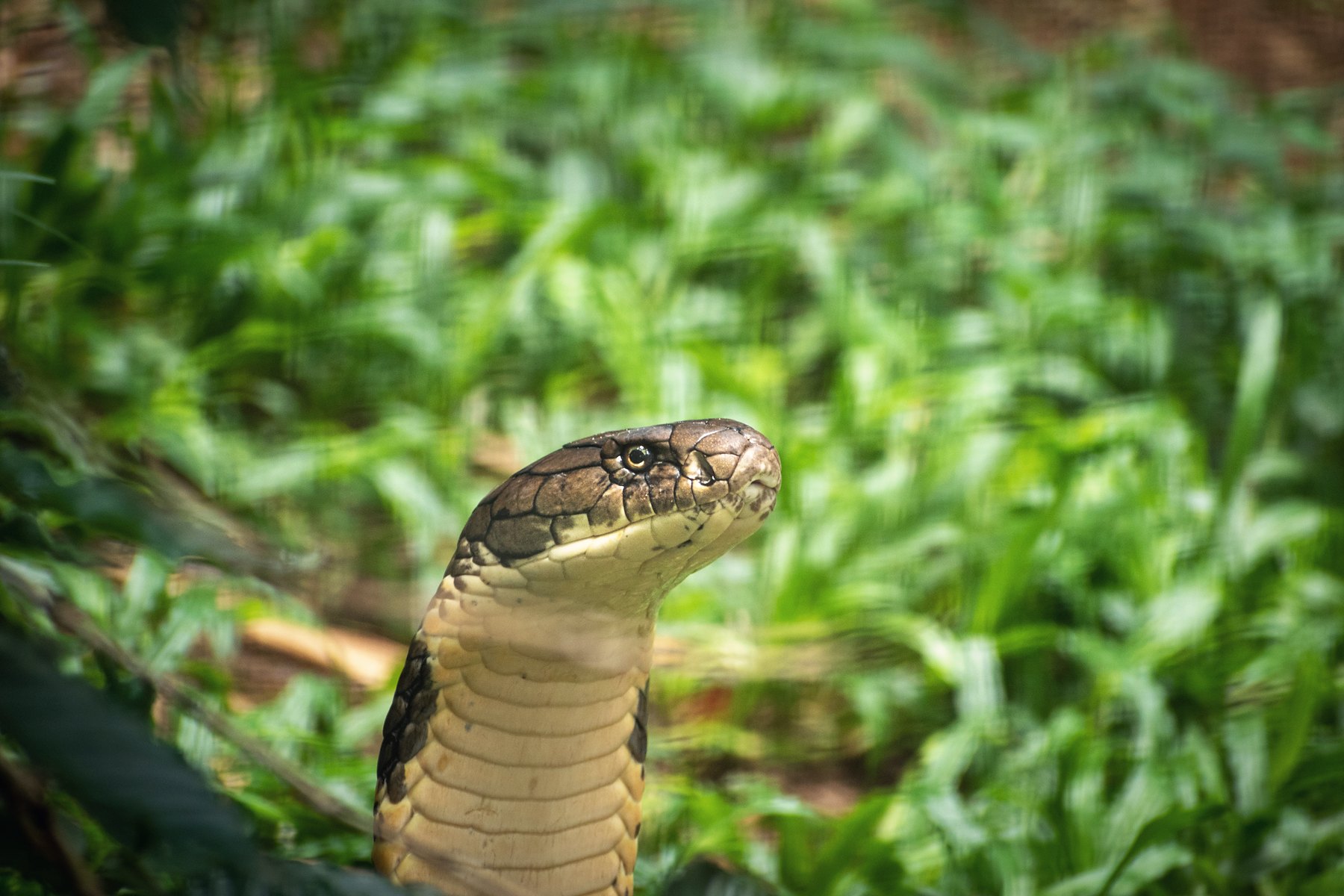
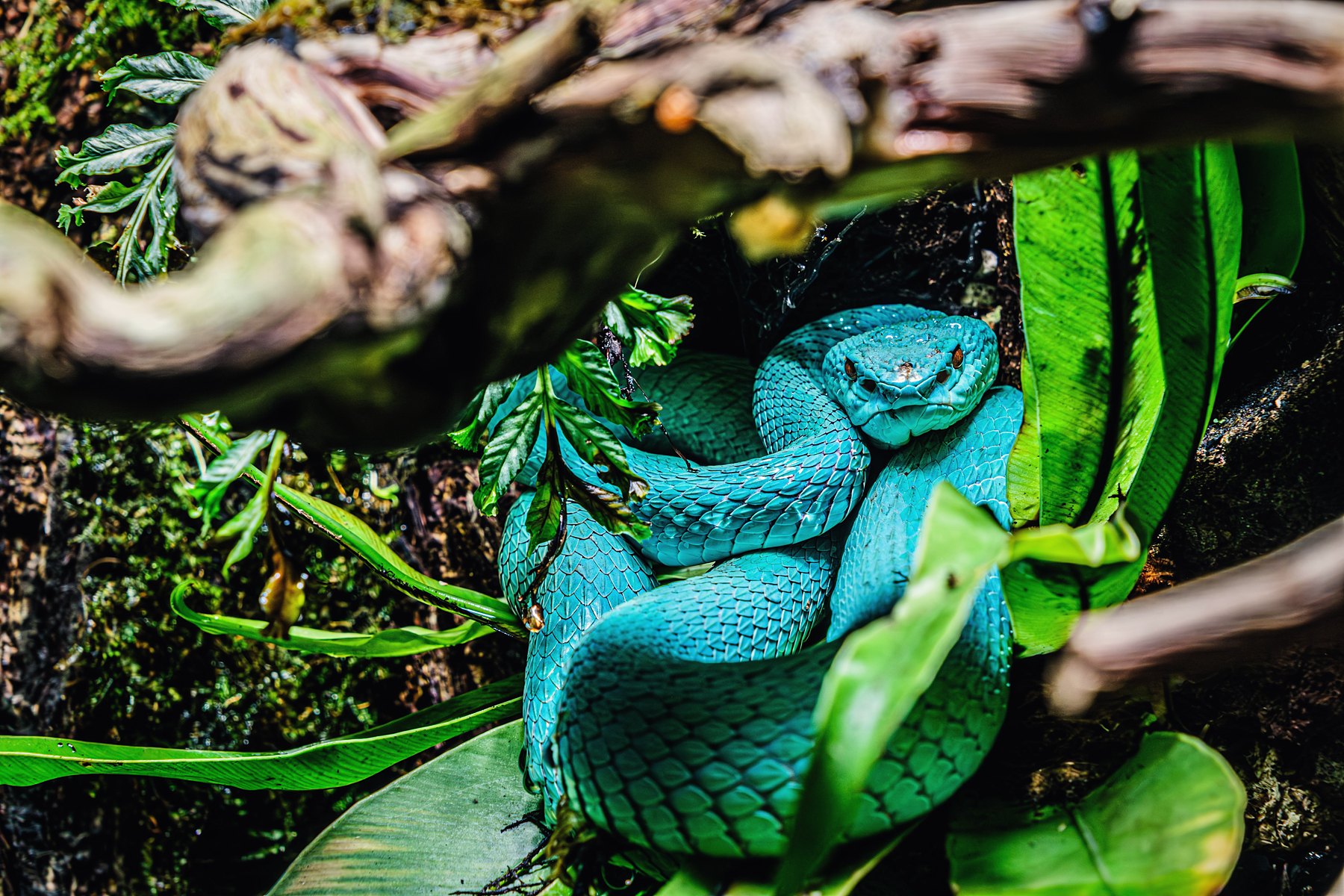
Photos: Mohan Kumar · Pexels License · edited / Abdul Hady · Pexels License · edited
The snakes worth knowing
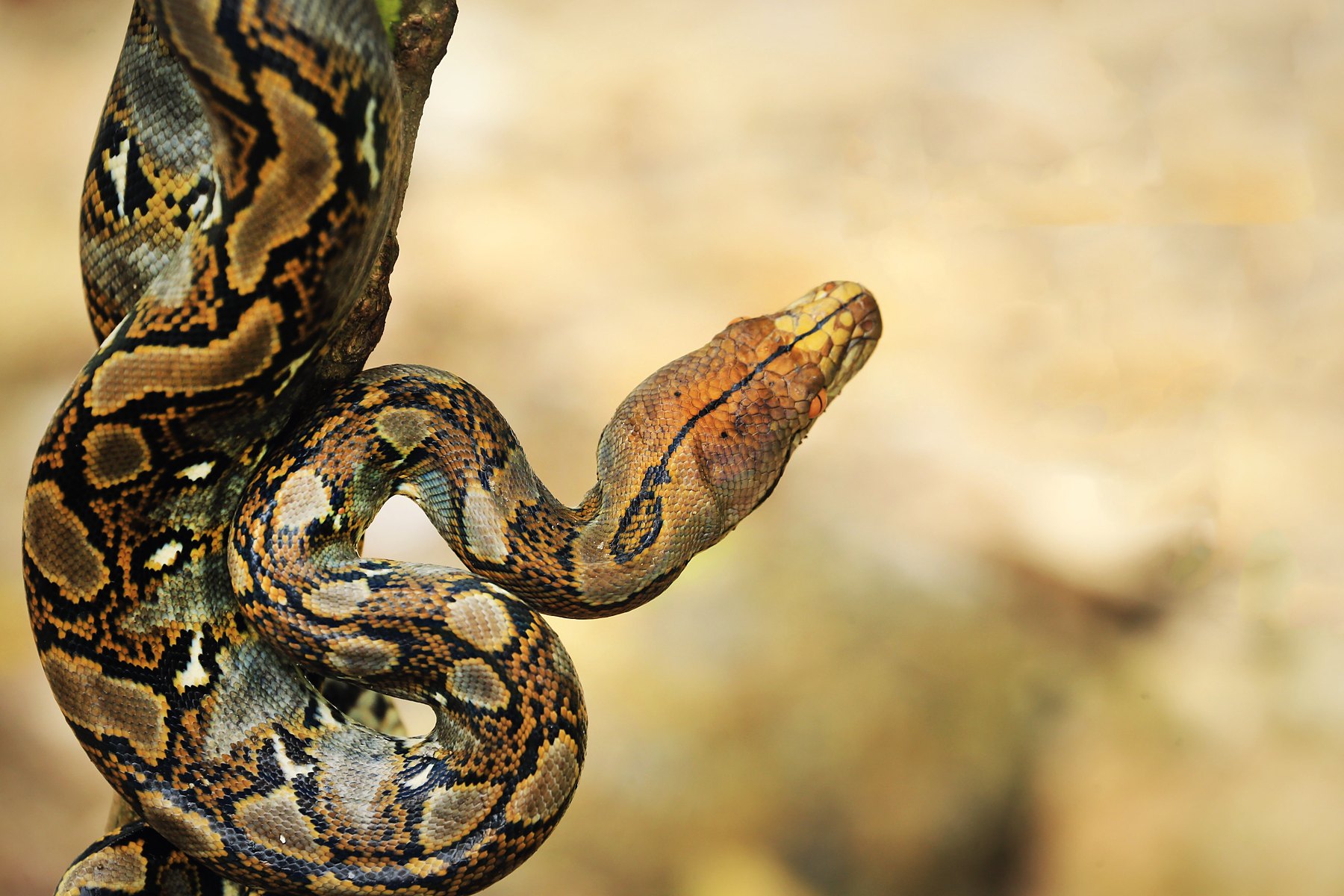
- Reticulated python: Asia's longest snake, occasionally found in drains, gardens and roofs, where it hunts rats and chickens. Pythons are not venomous; they kill by constriction. Large adults deserve distance, but encounters with people are uncommon.
- King cobra: The world's longest venomous snake. In Bali it is mostly associated with quieter forest and bamboo country in the west of the island and is very rarely seen by visitors.
- Javan spitting cobra: The cobra most likely to turn up around villages and rice fields. It rears up, spreads a hood and can spray venom toward the eyes when cornered.
- Green pit vipers: Small, bright green tree snakes, often with a white or yellow stripe along the side, that sit motionless in shrubs, bamboo and garden hedges. They account for many of the venomous bites in Bali, usually on hands reaching into foliage. Bites are very painful and cause swelling, but are rarely fatal with treatment.
- Kraits: The banded krait and the blue krait are night hunters with potent venom. They are generally docile, and most krait bites worldwide happen when someone lies on the ground or rolls onto a snake while sleeping on a floor mat.
- Sea snakes and sea kraits: The black-and-white banded sea krait is a familiar sight on the rocks around Tanah Lot Temple. Divers see sea snakes on reefs too. They are highly venomous but very reluctant to bite unless grabbed or trapped.
Bali also has many harmless species, including vine snakes, cat snakes, wolf snakes and the small blind snakes that turn up in potted plants and are often mistaken for worms.
Where you might see one
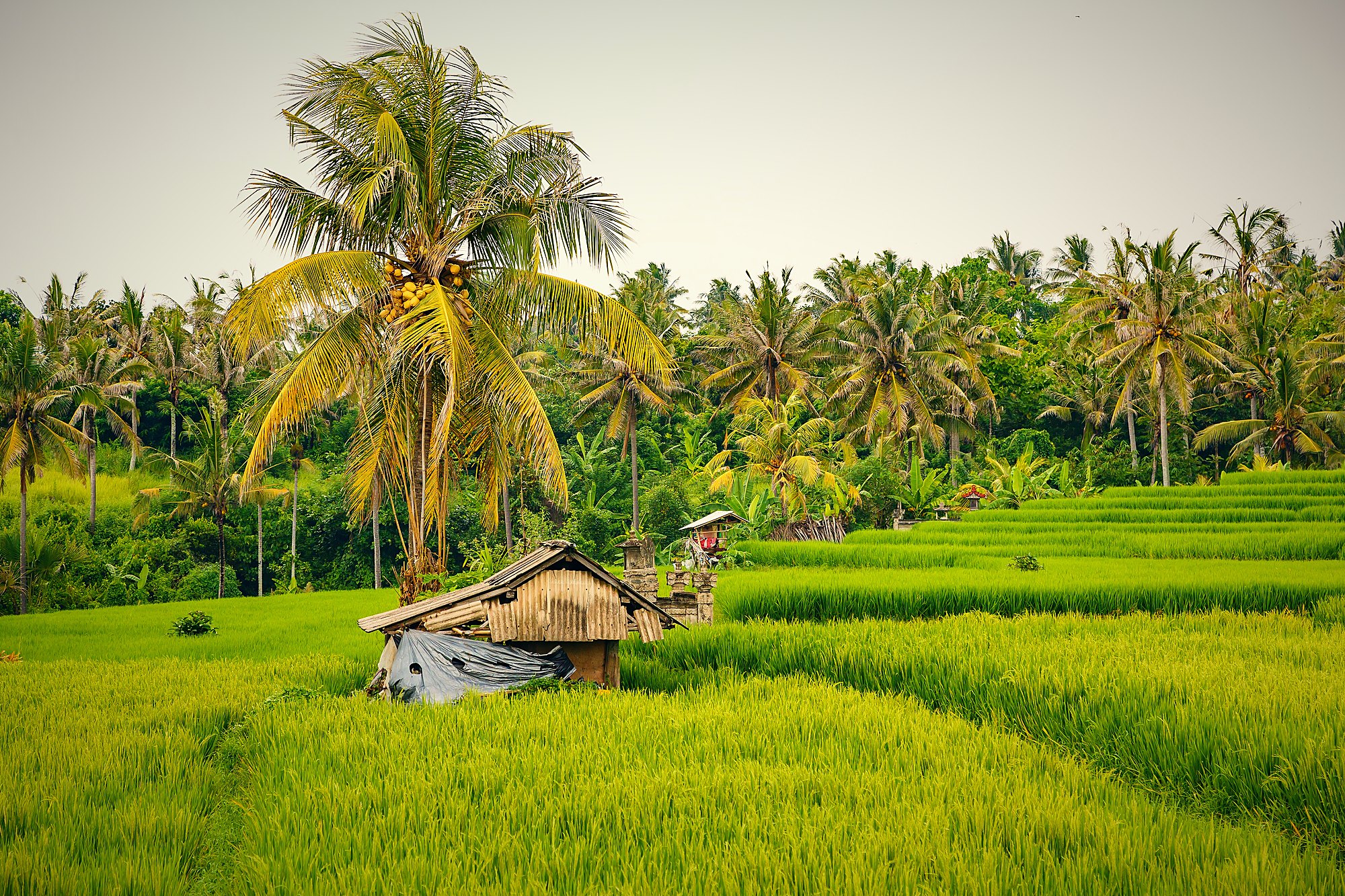
Snakes are scarcer above roughly 1,000 meters and more common in rice fields, river valleys and forest edges than in busy beach towns. Ubud, with its terraces, gullies and open-plan villas, sees more snakes than central Seminyak or Kuta. Canggu and Pererenan sit between the two: the new villas are built on former rice fields, and the remaining paddies around them are good snake habitat.
Snakes most often show up after heavy rain in the wet season, roughly November to March, when burrows flood and prey moves around. Open-sided bungalows, garden bathrooms, drains, woodpiles and thick hedges are the usual hiding spots. Walking the rice-field paths of Tegallalang or the Campuhan Ridge in daylight is fine; walking the same paths at night in flip-flops without a light is where people get unlucky.
How to avoid problems
- Use a flashlight when walking outside at night, including the path from your villa to the pool.
- Wear closed shoes on rice-field and jungle walks, and stick to the trail.
- Look before reaching into hedges, under rocks, into woodpiles or into dark corners of a storeroom.
- Shake out shoes, towels and clothes left outside, and keep doors shut after dark.
- Sleep on a bed rather than a floor mat in rural guesthouses.
- Keep gardens tidy and food waste covered, since rats attract snakes.
- Never try to catch, kill or photograph a snake up close. Most bites happen to people handling snakes.
What to do if someone is bitten
Most bites from venomous snakes are not immediately life-threatening, and some are "dry" bites with little or no venom. Stay calm and get to a hospital quickly. The World Health Organization's first-aid guidance is:
- Move away from the snake. Do not try to catch or kill it; a photo from a safe distance helps doctors, but is not essential.
- Remove rings, bracelets and anything tight near the bite before swelling starts.
- Keep the person still and immobilize the bitten limb with a splint or sling. Carry them if possible rather than letting them walk.
- Do not use a tight tourniquet, cut the wound, suck out venom, apply ice, or use herbal remedies or "black stones."
- Paracetamol is fine for pain. If the person vomits, lay them on their side, and watch their breathing closely.
- If a spitting cobra sprays venom into someone's eyes, rinse the eyes immediately with large amounts of clean water and go to hospital.
Get to a major hospital rather than a small clinic, because antivenom and intensive care are not available everywhere. In the south and Ubud that means the larger private hospitals or Prof. Ngoerah General Hospital (formerly Sanglah) in Denpasar. Expect to be observed for a day or more even if you feel fine. Save Bali's ambulance numbers (118 or 119, or 112) and see our emergency information page before you need it.
Snake rescue services
If a snake turns up in your villa, leave it alone, keep children and pets away, watch where it goes from a distance and call for help. Villa staff often know what to do, and Bali has volunteer snake rescuers who remove and relocate snakes rather than killing them. Two established names are Bali Snake Patrol, run by snake educator Ron Lilley, and Bali Reptile Rescue, a not-for-profit founded by Shinta Sukmawati. Both are active on social media; it is worth saving their current contact details when you check in, especially if you are staying near rice fields.
The bigger picture
Snakes keep Bali's rat population in check and are part of the reason the island's rice fields still work the way they have for centuries. Respect them, give them space, and they will do the same for you. For a wider look at the real risks on the island, which are mostly scooters and surf rather than wildlife, read our guide to whether Bali is safe.
Frequently asked
Are there venomous snakes in Bali?
Yes. Bali has spitting cobras, king cobras, green pit vipers, kraits and sea snakes, but they are shy and bites on visitors are rare.
Will I see a snake in my Bali villa?
Probably not, but it happens, especially near rice fields and in the wet season. Keep away from it and ask villa staff or a snake rescue service to remove it.
What should I do if a snake bites me in Bali?
Stay calm, keep the limb still, remove tight jewelry and go straight to a major hospital. Do not use a tourniquet, cut the wound or try to suck out venom.
Are the snakes at Tanah Lot dangerous?
The banded sea kraits at Tanah Lot are venomous but very docile. Look, do not touch, and they pose little risk.

101 Things Nobody Told You About Bali
The practical and cultural surprises first-timers wish someone had told them before landing.

BALI 2026
The complete island guide: regions, temples, beaches, getting around, what to avoid and how to plan the perfect trip.