The short answer
Bali is predominantly Hindu. About 86.5 percent of the island's registered residents follow Balinese Hinduism, according to Ministry of Religious Affairs figures for the end of 2024. Muslims make up roughly 10 percent, with small Protestant, Catholic and Buddhist communities making up most of the rest.
That makes Bali a striking exception within Indonesia, which is the world's most populous Muslim-majority country. Around 87 percent of Indonesians are Muslim, and only about 1.7 percent are Hindu. Put those numbers together and you get a remarkable fact: roughly four out of five Hindus in Indonesia live on this one small island.
How Bali stayed Hindu
Hindu and Buddhist ideas arrived in the Indonesian islands more than a thousand years ago, carried by traders and priests from India, and mixed with older beliefs in ancestors and spirits of place. For centuries, Hindu-Buddhist kingdoms ruled much of Java, and Bali was closely tied to them.
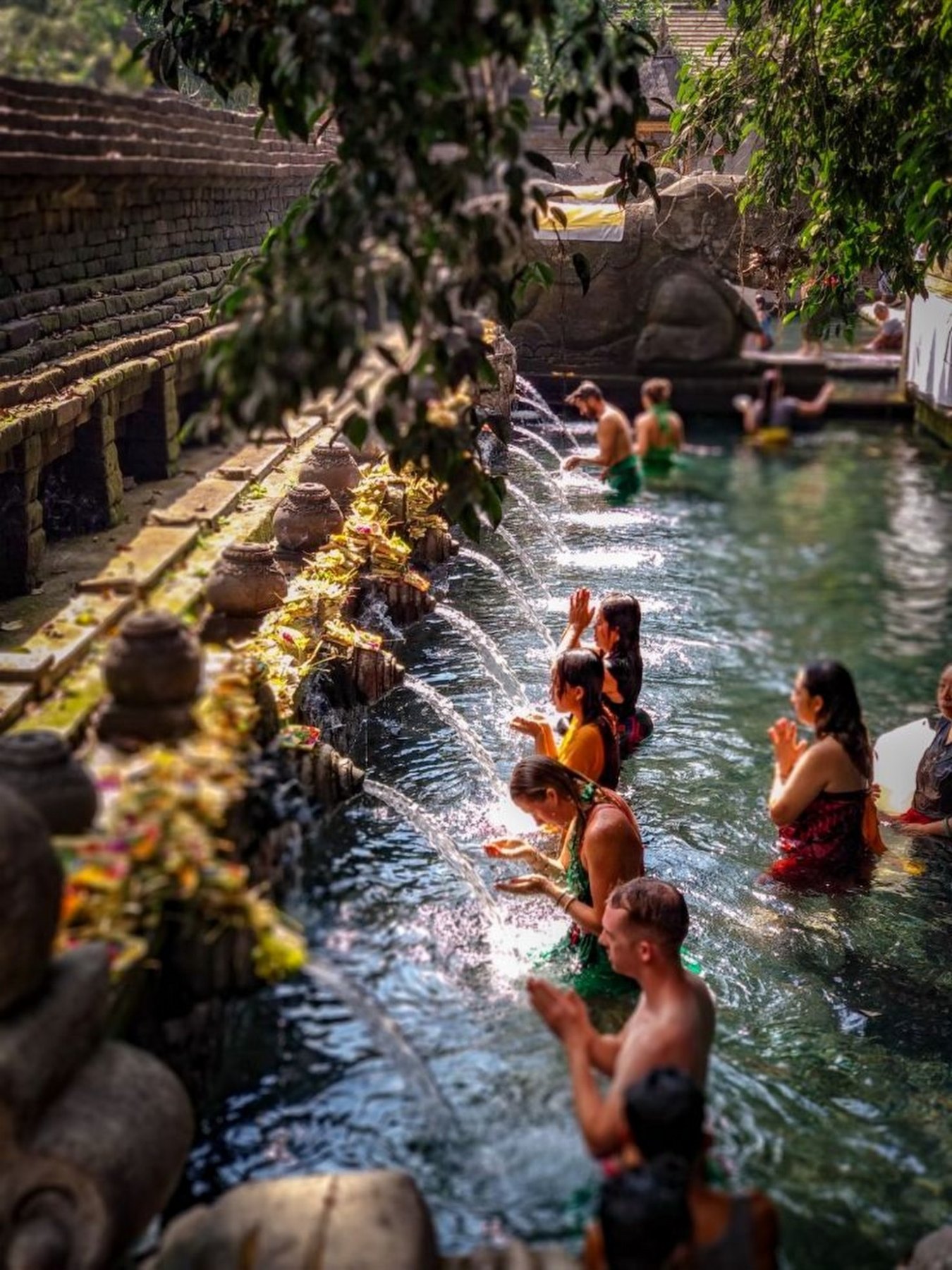
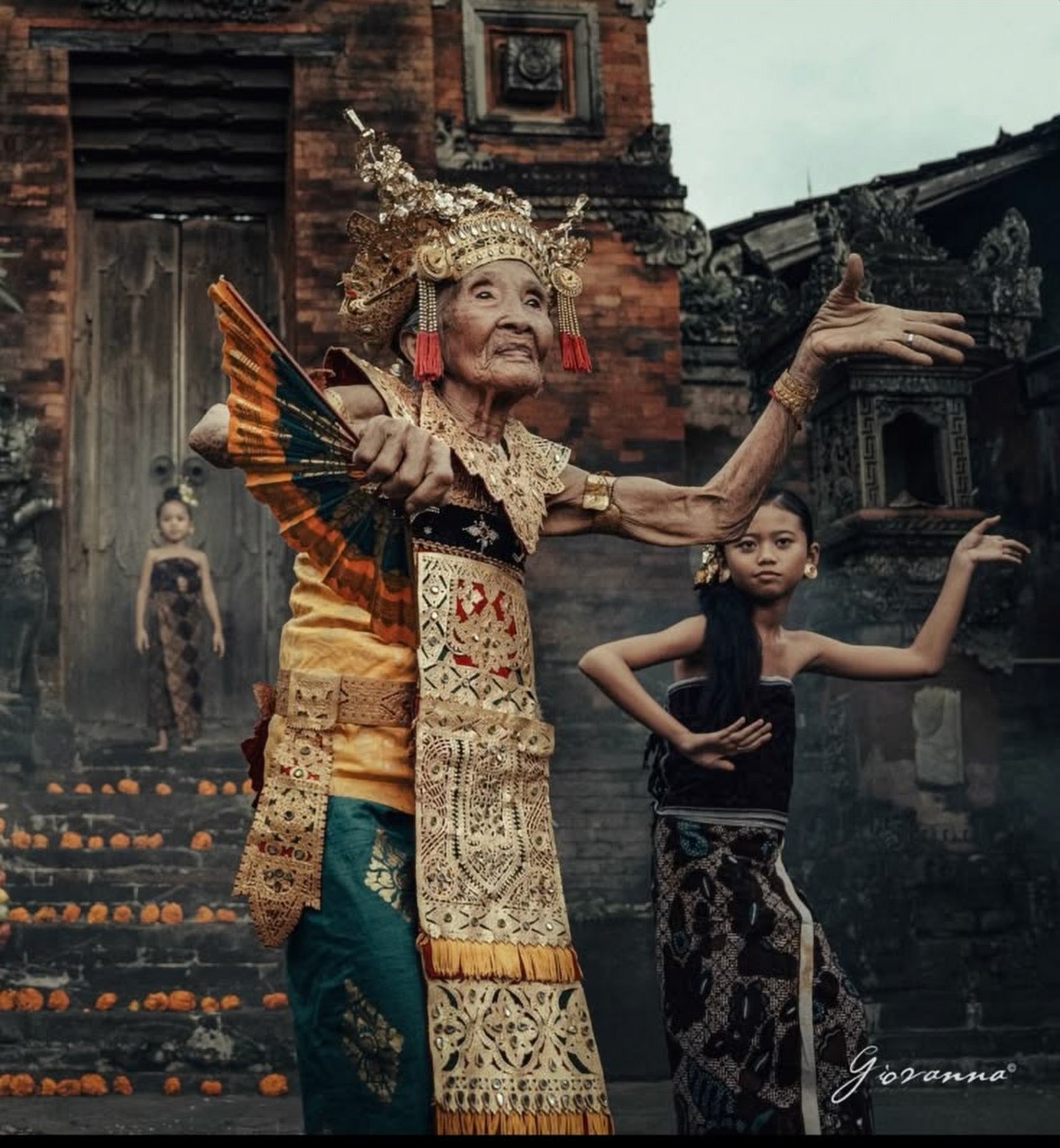
As Islam spread through Java from around the 15th and 16th centuries, many Javanese nobles, priests and artists are said to have moved east to Bali, bringing court traditions, literature and dance with them. Bali never converted. Its faith kept evolving into something distinctly Balinese, rooted in village temples, the rice-growing cycle and the island's volcanoes. Today Balinese Hinduism looks quite different from Hinduism in India: offerings are made daily by almost every household, holy water matters more than scripture for most worshippers, and each village runs its own ceremonial calendar. For more depth, see the story of Balinese Hinduism.
What Hindu Bali means for visitors
You will feel the religion everywhere, often before you understand it.
- Offerings: small palm-leaf trays called canang sari appear on doorsteps, dashboards, shop counters and sidewalks every morning. Step around them. Our guide to canang sari explains what they mean.
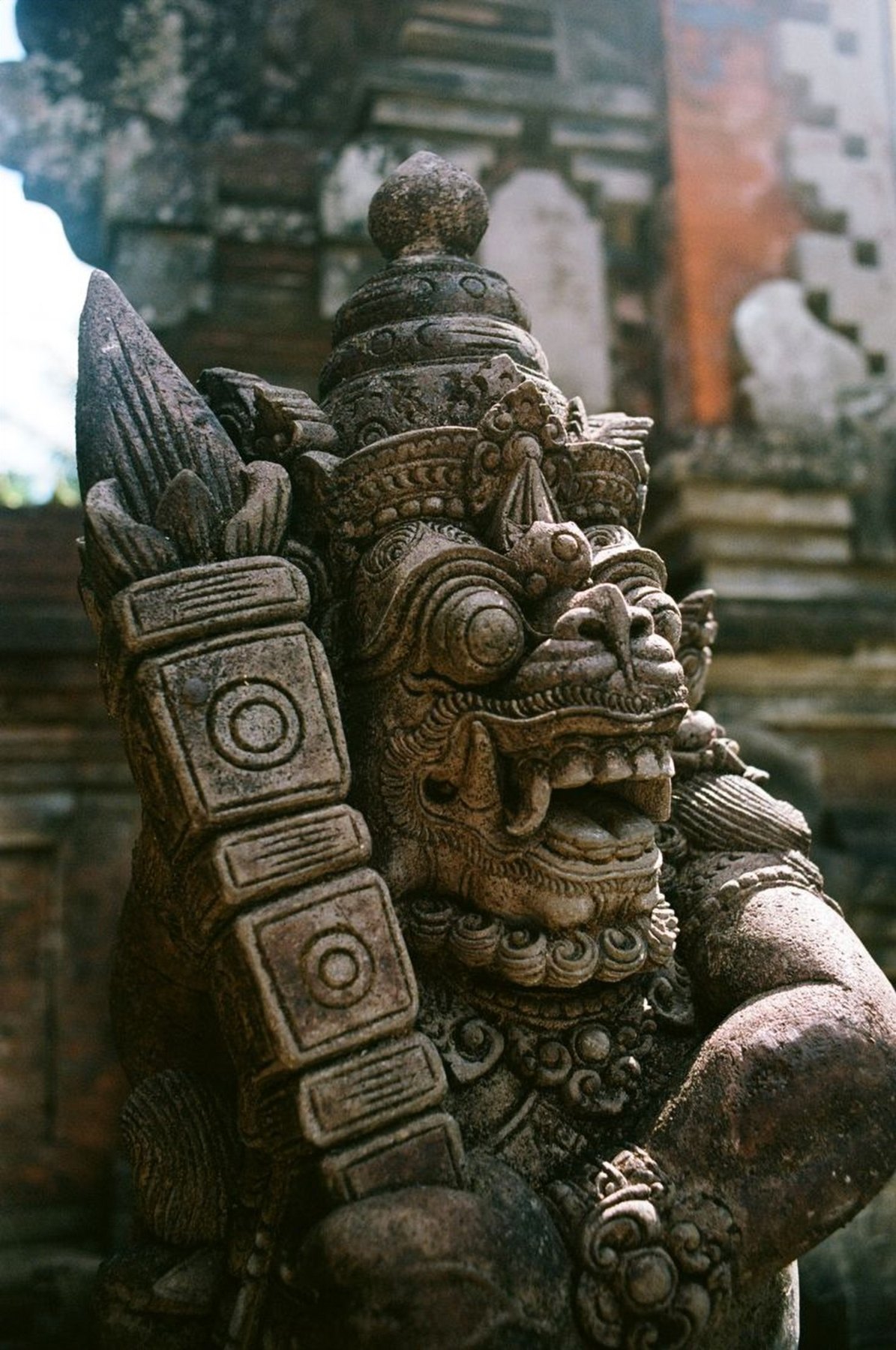
- Temples: there are thousands, from family shrines in every compound to great sea and mountain temples like Uluwatu and Besakih. Visitors are welcome at most of the famous ones, but you need a sarong and sash, covered shoulders, and should not enter areas reserved for worshippers. Women who are menstruating are traditionally asked not to enter. Read our temple etiquette guide before you go.
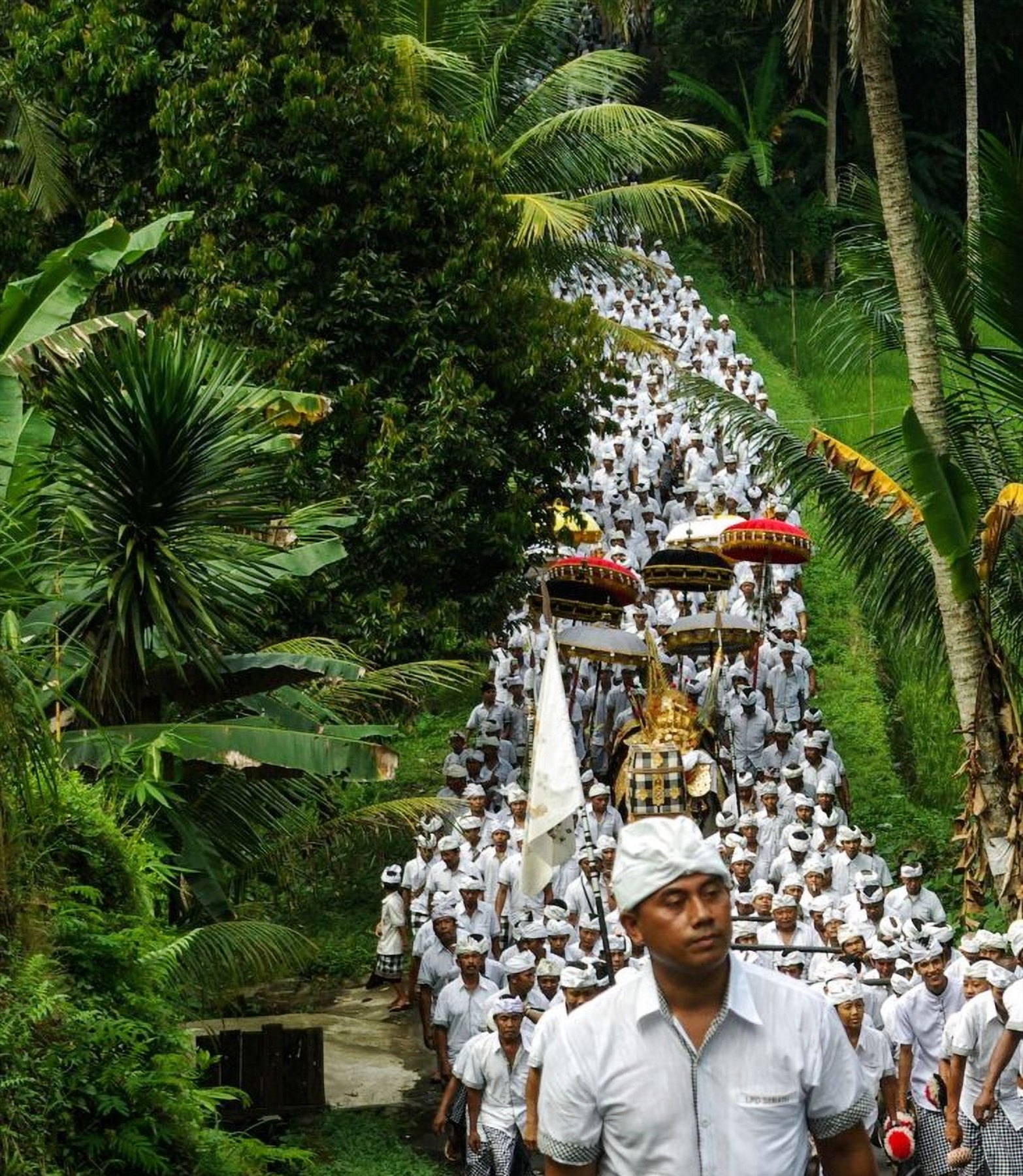
- Ceremonies and processions: temple anniversaries happen across the island constantly, so you will regularly meet roads closed for processions of women carrying towering offerings on their heads. Wait patiently, never drive through, and do not walk in front of people praying. Big festivals like Galungan and Kuningan fill streets with bamboo penjor poles.
- Cremations: a Balinese cremation is a joyful send-off rather than a somber funeral, and visitors are often tolerated at a respectful distance. Ask before photographing. See our guide to ngaben.
Nyepi: the day the island goes silent
The single biggest way Bali's religion affects travelers is Nyepi, the Balinese Day of Silence that marks the Saka New Year. For 24 hours from 6 am, the entire island shuts down. No one is allowed outside, the airport closes, hotels dim their lights and guests stay within the property. The night before, villages parade giant ogoh-ogoh demon effigies through the streets, which is one of the great spectacles of the year.
In 2027, Nyepi falls on Monday, March 8. If your trip includes that date, book a hotel you will enjoy being inside for a full day. The Nyepi guide covers the details.
Muslim life in Bali
Islam has been part of Bali for centuries, through Javanese, Bugis and other communities who settled along the coasts. Today Bali's Muslims include long-established Balinese Muslim villages as well as many people who moved from Java and Lombok for work in tourism, construction and trade. The western regency of Jembrana, near the Java ferry port of Gilimanuk, and parts of Denpasar have larger Muslim communities than the rest of the island.
For visitors, this shows up in a few practical ways:
- The call to prayer: in Ubud, Sidemen or most of the resort south you may rarely hear it. You are more likely to hear it in parts of Denpasar, around Kuta and Jimbaran, in the west, and much more on neighboring Lombok and Java.
- Mosques: there are mosques in every larger town. A good one to know is the Ibnu Batutah Great Mosque in Nusa Dua, which stands beside a Catholic church, a Protestant church, a Buddhist temple and a Hindu temple in the Puja Mandala complex, a symbol of Bali's religious tolerance opened in 1997.
- Ramadan and Eid: Bali carries on largely as normal during Ramadan, and restaurants and bars stay open. Around Eid al-Fitr, many Muslim workers travel home to Java and Lombok, so some warungs close for a week or two and the ferry ports get very busy.
Is halal food easy to find in Bali?
Easier than you might expect, but you do need to look. Pork is central to Balinese cooking, from babi guling, the famous spit-roasted suckling pig, to pork satay and lawar, and many local warungs serve it. Alcohol is also widely available.
At the same time, Bali has a large number of Muslim-run eateries. Look for warungs serving Javanese, Padang or Lombok food, or signs reading "Muslim" or showing the halal logo. Most chain restaurants, many hotel kitchens and plenty of seafood places in Jimbaran serve halal food, and Muslim-owned food stalls cluster near mosques. If it matters to you, ask: staff are used to the question, and "halal?" is understood everywhere. Our food guide covers which dishes typically contain pork.
Respect goes both ways
Bali's harmony between faiths is something people here are proud of, and it is worth honoring as a guest. Dress modestly away from the beach, especially in villages and at any place of worship. Do not climb on shrines or pose disrespectfully at temples; foreigners have been deported for exactly that. And whatever you believe, if you are invited to join a ceremony, accept with curiosity and follow the lead of your hosts. It is often the moment people remember most about their trip.
Frequently asked
Is Bali mostly Hindu or Muslim?
Bali is mostly Hindu. About 86.5 percent of residents practice Balinese Hinduism, while roughly 10 percent are Muslim, according to 2024 Ministry of Religious Affairs data.
Is Bali a Muslim country?
Bali is not a country but a province of Indonesia, which is about 87 percent Muslim. Bali itself is the one province with a large Hindu majority.
Is it easy to find halal food in Bali?
Yes, with a little attention. Pork is common in Balinese cooking, but Muslim-run warungs serving Javanese and Padang food, halal-certified chains and many hotel kitchens are easy to find.
Can non-Hindus visit temples in Bali?
Yes, most major temples welcome visitors who wear a sarong and sash, cover their shoulders and stay out of areas reserved for worship.

Bali: Culture, Tradition & Religion
Offerings, ceremonies, temples and beliefs: 100 short chapters on what makes Balinese culture unlike anywhere else.

The Sacred Heart of Bali
Offerings, ceremonies, temple festivals and the unseen world that shapes daily life on the Island of the Gods.