The short answer
Cover your legs with a sarong and tie a sash around your waist, keep your shoulders covered, stay out of the inner courtyards unless you are there to pray, never climb on shrines, walls or sacred trees, and step around the offerings on the ground. Women who are menstruating are asked not to enter temple grounds or the inner areas. Speak softly, ask before photographing people at prayer, and give way to anyone carrying offerings. Do that and you will be welcome at almost any temple on the island.
These are not only customs. Since 2025 they are also part of the official rules for foreign visitors issued by the Bali provincial government.
Bali's official do's and don'ts
In March 2025, Governor Wayan Koster issued Circular Letter No. 7 of 2025, updating the 2023 list of do's and don'ts for foreign tourists. The temple-related points:
- Do respect the sanctity of temples, statues and other sacred religious objects, and follow local customs, especially during ceremonies.
- Do dress modestly and appropriately at temples, attractions and public places.
- Don't enter the main and middle sanctums of a temple (utama mandala and madya mandala) unless you are praying and wearing traditional Balinese dress.
- Don't enter these sacred areas while menstruating.
- Don't climb sacred trees, shrines or monuments.
- Don't take inappropriate or nude photos at sacred sites.
The circular also covers wider behavior: no littering, no single-use plastics, no swearing or aggressive behavior, using licensed guides at cultural sites, and paying the tourist levy. Violations can lead to sanctions under Indonesian law, enforced by the civil service police (Satpol PP) and Bali Police. Most tourists never come near these limits, but a handful of viral cases, from naked photos on sacred trees to dancing on shrines, ended in deportation.
Sarong and sash: how to dress
Every temple visit requires a sarong (kamen) wrapped around the waist and covering the legs to below the knee, plus a sash (selendang) tied around the waist. The sash is the essential part; it symbolically separates the upper and lower body and signals respect. Men and women both wear them. Cover your shoulders too: a T-shirt is fine, a tank top is not.
At big temples such as Uluwatu, Tanah Lot, Tirta Empul and Besakih, sarongs and sashes are usually included in the ticket or lent at the gate, sometimes for a small donation. Buying your own costs little at any market and is worth it if you plan several visits. A light sarong also doubles as a beach cover and a scarf on a cold Kintamani morning.
The menstruation rule and other sebel states
Balinese Hinduism treats certain conditions as sebel, a state of ritual impurity that keeps people out of temples temporarily. It applies to Balinese people as much as to visitors. The main ones are menstruation, having recently given birth, and being in mourning after a death in the family. Many temples also ask people with open, bleeding wounds not to enter.
Signs at temple entrances usually spell this out in English. There are no checks; it is left to your honor. If it applies to you, the easy, respectful option is to enjoy the outer grounds, the views and the surrounding landscape, and let your companions go in.
Inside the temple: where to walk and what not to touch
Balinese temples are laid out in three courtyards, from the outer jaba sisi to the middle jaba tengah and the innermost jeroan, the most sacred space. At many temples visitors can wander the outer courtyards freely while the inner areas are reserved for worshippers. At others, like Lempuyang, Besakih and Tirta Empul, you can enter further, often with a local guide. Follow the signs and the guide.
A few rules hold everywhere:
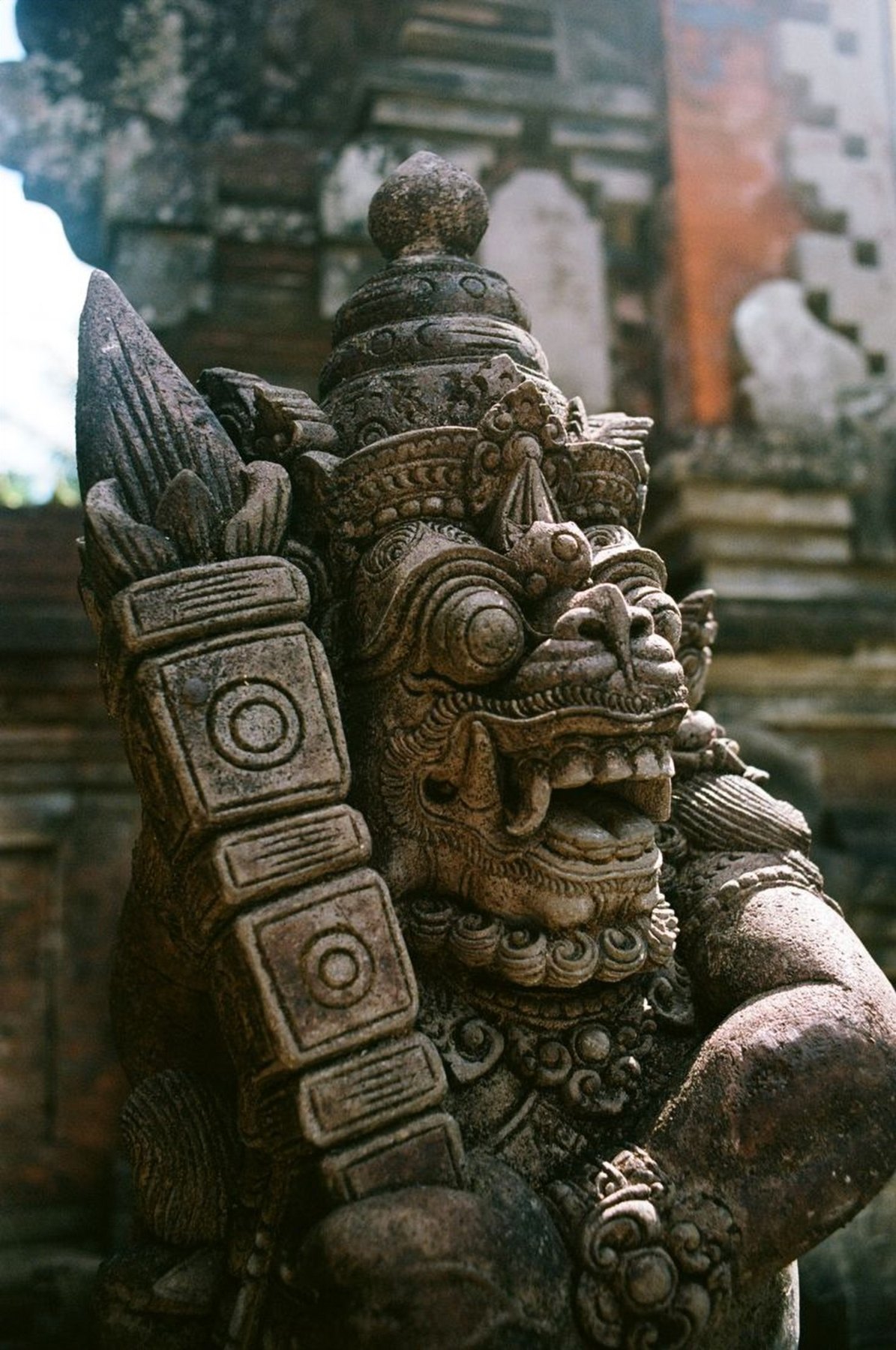
- Never climb on walls, gates, shrines, statues or the meru towers, and never sit on a shrine or altar.
- Do not stand higher than a priest or than offerings during a ceremony.
- Do not point your feet at shrines when you sit.
- Do not touch anyone on the head, and use your right hand to give or receive.
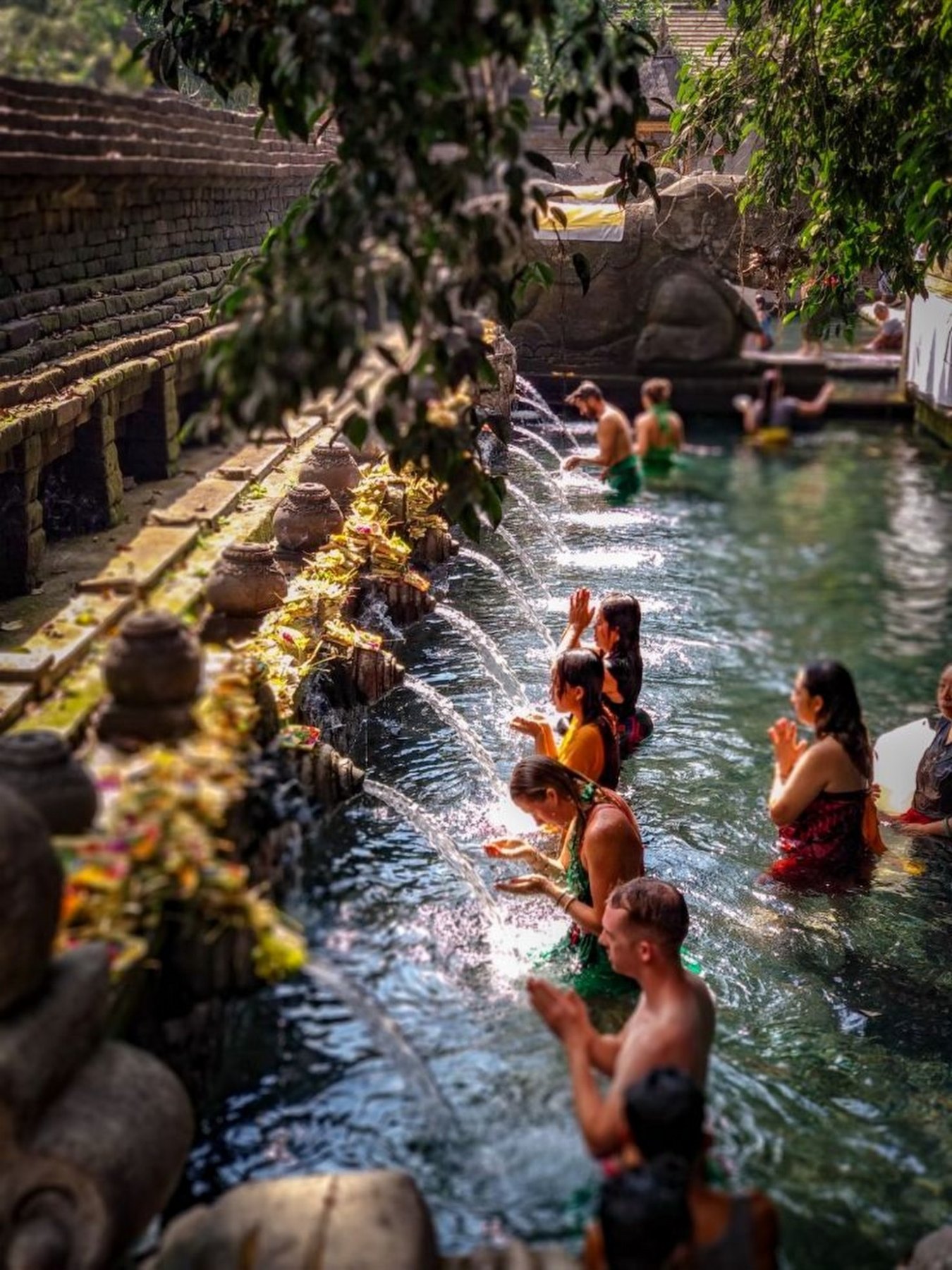
- At holy springs such as Tirta Empul, follow the bathing order your guide explains and never use soap or shampoo.
- Leave a donation in the box; a few thousand rupiah is plenty at village temples.
Photos, ceremonies and offerings
Photography is allowed at most temples, but people at prayer are not part of the scenery. Ask before photographing worshippers, keep a respectful distance, never use flash during a ceremony, and skip the drone. Joke poses, handstands or skimpy outfits in front of shrines are exactly what the governor's rules target.
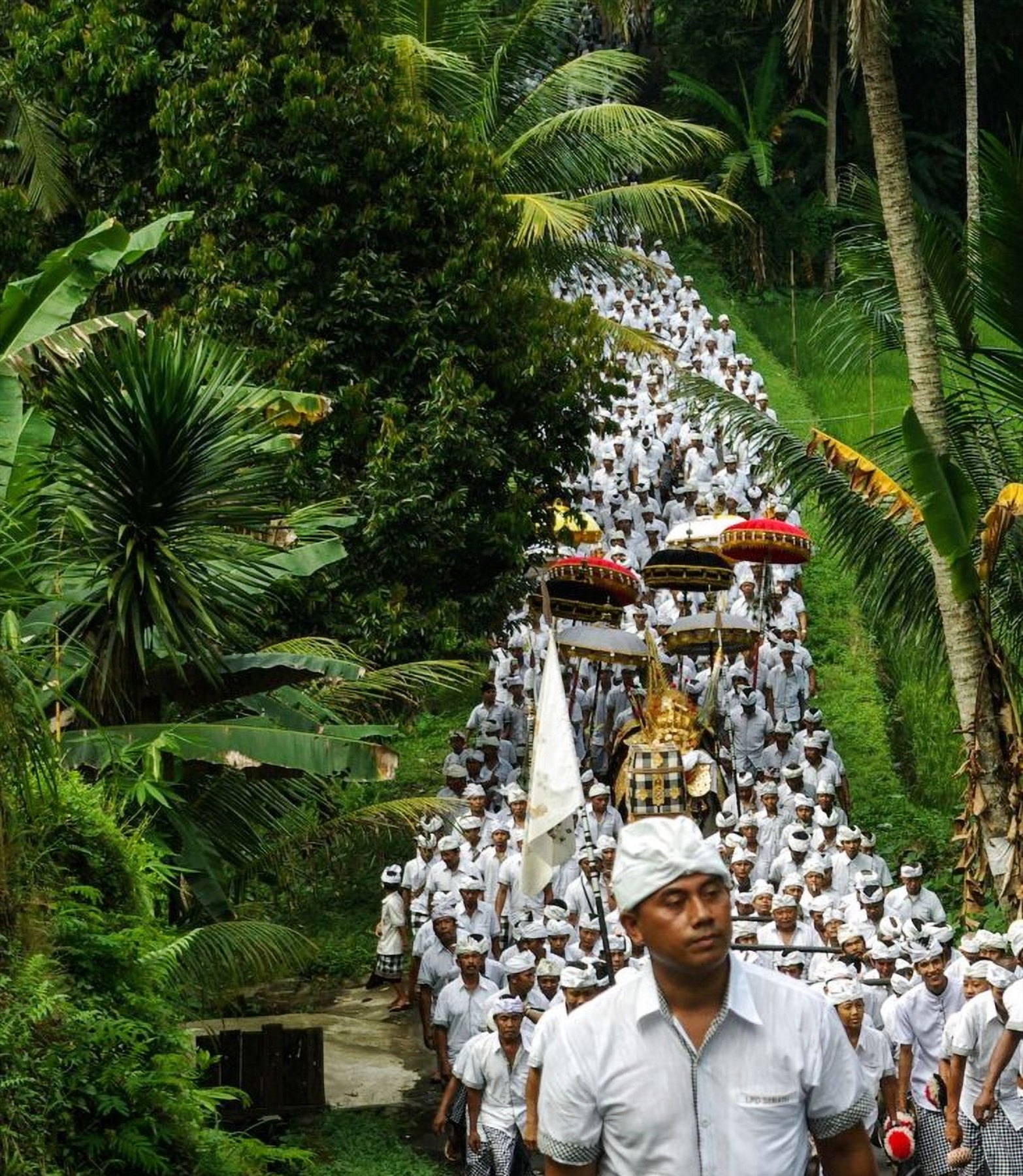
You may well walk into a ceremony. Odalan, a temple's anniversary, comes around every 210 days by the Balinese calendar, and processions with gamelan and towering offerings are part of daily life. Step aside to let processions pass, never walk in front of people praying, and stay at the edges unless invited closer. On major days such as Galungan and Kuningan, some temples close to visitors entirely.
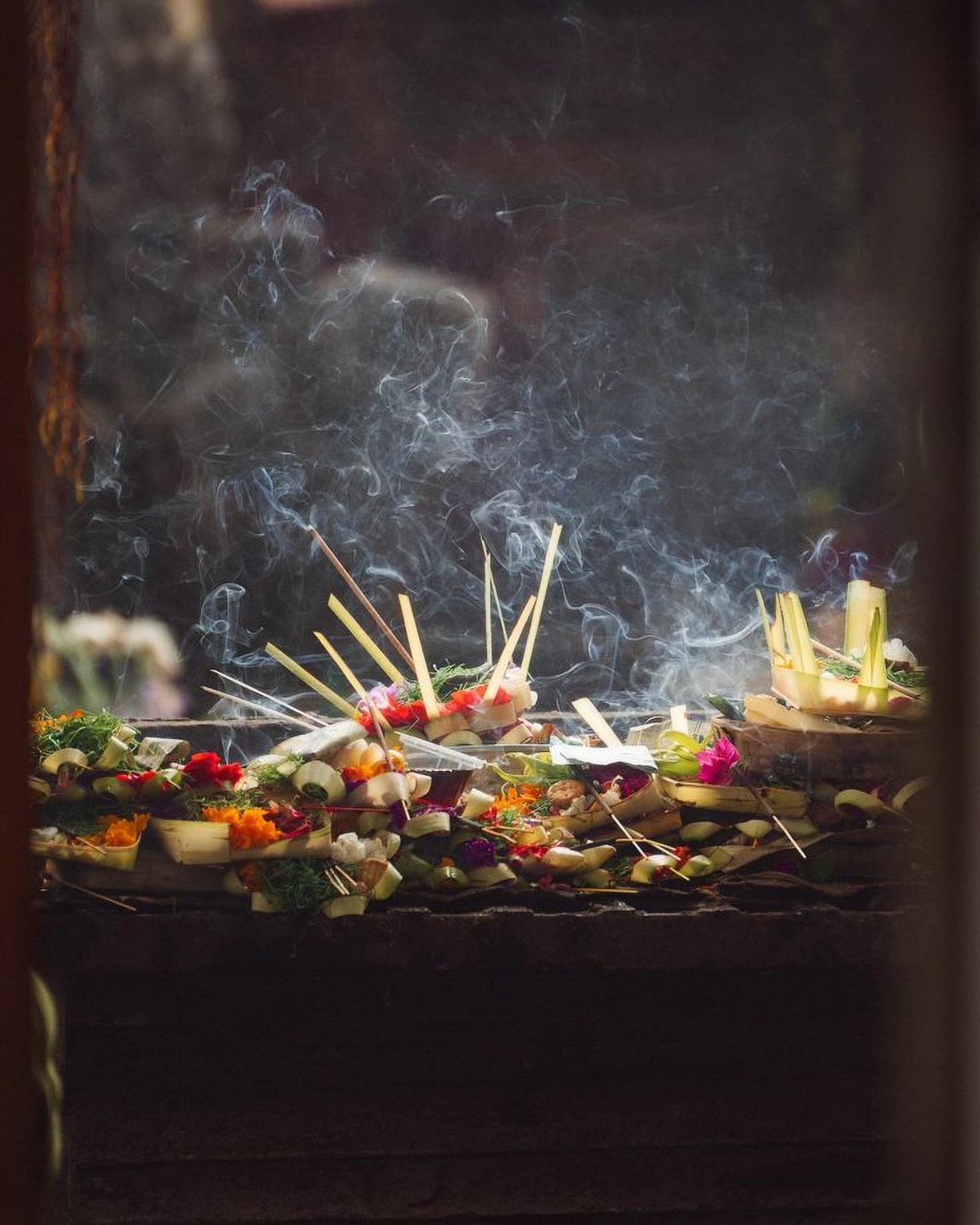
Then there are the canang sari, the small palm-leaf trays of flowers, rice and incense placed every day on doorsteps, shrines, dashboards and pavements. Those on the ground are meant for lower spirits, and while locals accept that a scooter or a sandal will eventually crush them, deliberately stepping on one is disrespectful. Look down as you walk and step around them. Never move or take anything from an offering.
A respectful visit, step by step
Arrive early, when temples are quiet and the light is soft. Pay at the official ticket booth or donate where there is no booth, put on your sarong and sash at the gate, and read the signs at the entrance. Walk slowly, follow the paths, and if you are unsure whether a gate is open to you, ask. The Balinese are famously patient with visitors who make an effort. Treat a temple as you would a church or mosque at home, and you will see the island's spiritual life up close.
Frequently asked
Do I need a sarong to visit temples in Bali?
Yes. Everyone wears a sarong covering the legs and a sash around the waist. Large temples usually lend them at the entrance, sometimes for a small donation.
Can women on their period enter Bali temples?
No. Menstruation is considered a temporary state of ritual impurity, and Bali's 2025 tourist rules ask menstruating women not to enter temple sanctums. It is an honor system.
Can tourists enter the inner courtyard of Balinese temples?
Generally no. Bali's Circular Letter No. 7 of 2025 bars visitors from the main and middle sanctums unless they are praying in traditional dress.
Is it OK to step on offerings in Bali?
Avoid it. Step around canang sari on the ground and never move or take anything from an offering.

Bali Culture Guide
Where Balinese Hinduism came from, how it is practiced today and the traditions every visitor should understand.

Bali: Culture, Tradition & Religion
Offerings, ceremonies, temples and beliefs: 100 short chapters on what makes Balinese culture unlike anywhere else.