The short answer
A Balinese cooking class is a half-day experience, usually 4 to 6 hours, that starts with an early visit to a local market, moves to an open-air kitchen in a family compound or rice-field setting, and ends with you eating everything you made. Most classes cover a spice paste called base genep, sate lilit, a vegetable dish such as sayur urab, something steamed in banana leaf and a sweet like klepon. Expect to pay around IDR 300,000 to 500,000 (about US$17 to $28) at a well-run village school near Ubud, and IDR 800,000 to 1,500,000 (US$45 to $85) at a resort or chef-led class.
Ubud is the heartland, with the widest choice and the most authentic settings. Canggu, Jimbaran and Nusa Dua have a handful of polished hotel classes if you do not want to make the trip inland.
What you actually learn
The best classes teach you how Balinese food thinks, not just a few recipes.
The market visit. Most morning classes begin around 7 or 8 a.m. at a local market, often in Ubud or the next village. Your teacher walks you through the produce: galangal, turmeric, kencur (aromatic ginger), candlenut, kaffir lime, torch ginger flower, palm sugar, fresh coconut. You will also see the trays of flowers and palm-leaf baskets sold for daily offerings, which explains why so many market stalls open before dawn.
Base genep. This is the foundation of Balinese cooking: shallot, garlic, ginger, galangal, turmeric, chili, candlenut, coriander seed and shrimp paste, pounded by hand in a stone mortar called a cobek and then fried until fragrant. Many families make it fresh every day. Once you have made it, you understand why Balinese food tastes so different from the Indonesian staples you see on every menu.
Typical dishes. Menus change by school and season, but you will usually cook six to nine dishes, such as:
- Sate lilit: minced fish or chicken mixed with grated coconut and spice paste, wrapped around lemongrass stalks and grilled over coconut husk.
- Lawar: finely chopped vegetables, young jackfruit or green beans tossed with grated coconut and spices. The ceremonial version includes meat and fresh blood, but classes almost always teach a vegetable or chicken version.
- Pepes ikan: fish steamed in banana leaf with spice paste.
- Sayur urab: blanched vegetables with spiced coconut.
- Tempe manis: crisp fermented soybean cake in sweet soy and chili.
- Klepon or dadar gulung: green pandan sweets filled with palm sugar.
Some village schools also show you how to make coconut oil, weave a small offering or cook rice the traditional way. The background on these dishes lives in our guide to what to eat in Bali.
Where to take a class
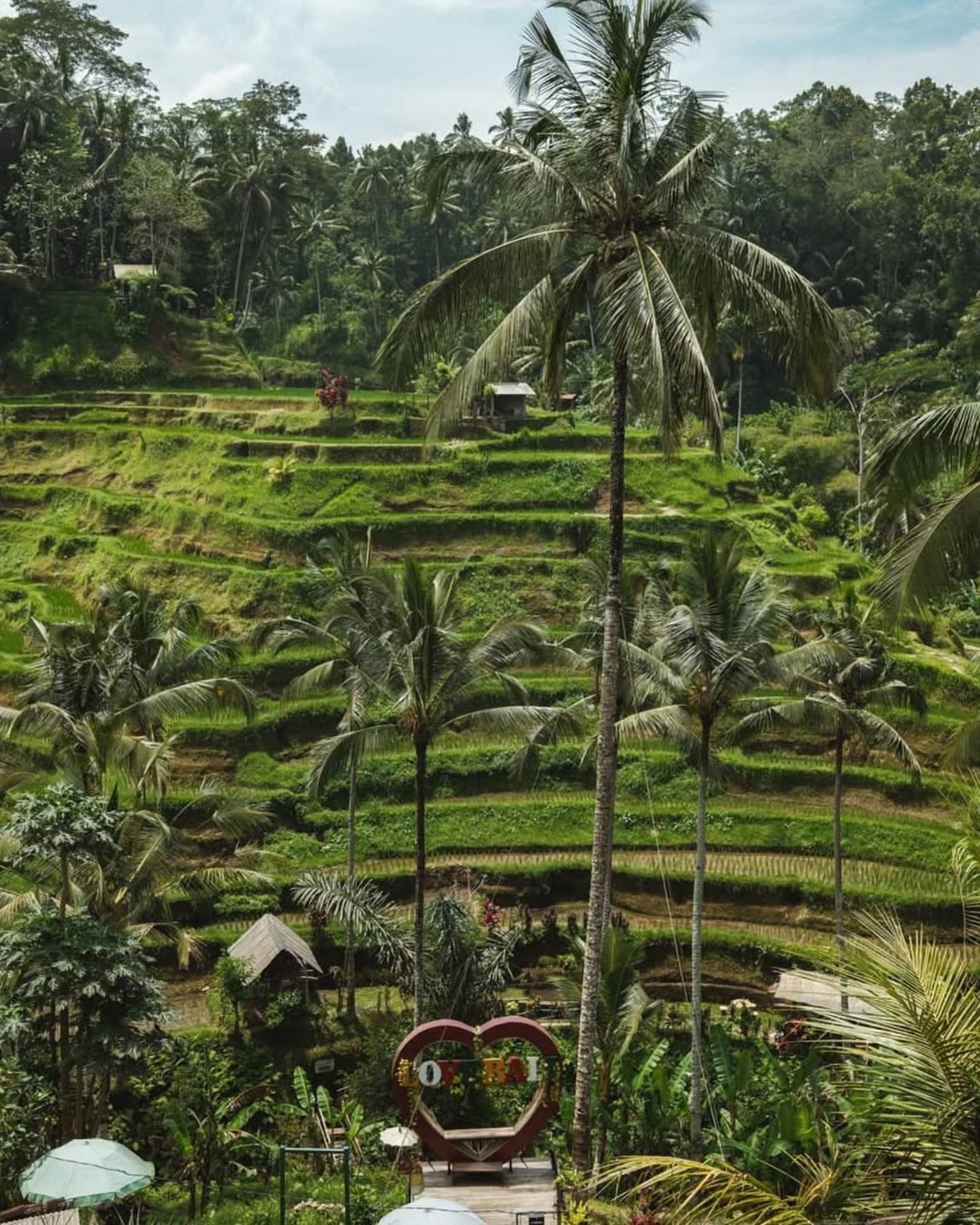
Ubud and the villages around it. This is where most travelers cook, and for good reason. Long-running examples include Paon Bali in Laplapan village east of Ubud, taught in a family compound, with morning and afternoon classes and a vegetarian or meat menu (around IDR 350,000); Casa Luna Cooking School on Jalan Bisma, which runs themed classes including a vegan option (around IDR 400,000 to 500,000); and Lobong Culinary Experience north of Ubud, which includes hotel transfers and a market trip on its morning class (around IDR 450,000 to 475,000). Further out, Subak Cooking Class near Tampaksiring adds a rice-field walk to nine recipes for around IDR 300,000 to 350,000, and Bali Farm Cooking School, on an organic farm north of Ubud, runs longer classes of 6 to 7 hours for around IDR 480,000.
Canggu, Jimbaran and Nusa Dua. If you are based in the south, the hotel classes are polished but pricier. The class run by Ibu Soelastri at Hotel Tugu in Canggu costs around IDR 800,000 plus tax and needs booking two days ahead, while the Scenography Cooking School at RIMBA by AYANA in Jimbaran runs around IDR 1,050,000 plus tax. Art Cafe Bumbu Bali in Nusa Dua runs a long market-to-table day that starts at the Jimbaran market.
From Seminyak or Canggu, Ubud is roughly 60 to 90 minutes each way by car, so either stay a night in Ubud or book a morning class and plan a quiet afternoon.
Prices compared
- Village schools around Ubud: around IDR 300,000 to 500,000 (US$17 to $28), usually including market tour, lunch and recipe booklet; transfers within the Ubud area often included.
- Specialist and plant-based schools: around IDR 500,000 to 650,000 at places such as New Earth Cooking School in Tabanan; chef-led plant-based classes, such as those at Moksa in Sayan, cost around IDR 1,500,000.
- Resort classes: IDR 800,000 to well over IDR 1,000,000, plus around 21 percent tax and service.
Prices change, so treat these as a guide and confirm when you book.
Vegetarian and vegan options
Bali is an easy place to cook vegetarian. Tempeh, tofu, jackfruit, long beans and coconut do a lot of the work in Balinese kitchens anyway. Many Ubud schools, including Paon Bali, let you choose a vegetarian menu, Casa Luna and Tresna Bali offer vegan classes, and Ubud has dedicated plant-based schools such as Sayuri Healing Food Academy. If you are vegan, mention that base genep and many sambals contain shrimp paste (terasi), and ask for a version without it. Our vegan food in Bali guide has more on ordering.
How to choose a good class
- Pick a morning class if you want the market. Afternoon sessions usually skip it.
- Check the group size. Ten or fewer means you actually cook rather than watch.
- Look for hands-on pounding and grilling, not just pre-chopped ingredients and a demonstration.
- Ask what is included: transfers, lunch, drinks and a printed recipe booklet are standard at good schools.
- Choose the setting you want: a family compound feels personal, a rice-field kitchen is more scenic, and a resort class is the most comfortable.
Book a day or two ahead in high season, July, August and over Christmas, and come hungry. You will eat a lot more than you expect.
Frequently asked
How much does a cooking class in Bali cost?
Village schools around Ubud typically charge around IDR 300,000 to 500,000 (about US$17 to $28) including market tour and lunch. Resort and chef-led classes cost IDR 800,000 to 1,500,000 or more.
Where is the best place to take a cooking class in Bali?
Ubud and the surrounding villages have the widest choice and most authentic settings, often in family compounds or among rice fields. Canggu, Jimbaran and Nusa Dua have pricier hotel classes.
Are there vegetarian cooking classes in Bali?
Yes. Many Ubud schools offer a vegetarian menu on request, several run dedicated vegan classes, and plant-based schools operate around Ubud and Tabanan.
How long is a Balinese cooking class?
Most run 4 to 6 hours including the market visit and the meal. Some farm-based classes last 6 to 7 hours.

Bali: Culture, Tradition & Religion
Offerings, ceremonies, temples and beliefs: 100 short chapters on what makes Balinese culture unlike anywhere else.

BALI 2026
The complete island guide: regions, temples, beaches, getting around, what to avoid and how to plan the perfect trip.