Is February a good time to visit Bali?
February is a good month for Bali if you want green landscapes, low prices and space, and a poor one if your trip depends on guaranteed beach days. It is the heart of the wet season: expect rain on more than half of all days, sticky humidity and some rough boat crossings. In return you get the rice terraces at their most vivid, villas at some of the lowest rates of the year and an island that feels more Balinese than at any time in the dry season, once the Australian summer holidays end in the first days of the month.
Think of February as a month for Ubud, the eastern hills and slow days, with the beach as a bonus rather than the plan.
The weather: wet, warm and very green
Long-term averages put February at around 30 to 31°C by day and 24°C at night on the south coast, with roughly 260 to 290 mm of rain on about 18 days. Only January is reliably wetter. The sea is at its warmest, around 29°C, and the air feels heavy most of the time.
The good news is that February rain rarely lasts all day. The usual pattern is a bright or hazy morning, clouds building over the mountains by lunch and a heavy downpour in the afternoon or evening, sometimes with thunder that rattles the shutters. A few times a month a monsoon trough settles over the island and brings a grey day of steady rain. Plan outdoor sightseeing for the morning, keep afternoons flexible and you lose surprisingly little.
Two side effects are worth knowing. Low streets in Kuta, Seminyak and parts of Canggu can flood briefly after a cloudburst, which slows traffic badly. And the seasonal currents that wash plastic onto the southwest beaches, from Kuta up to Canggu, are still running, so those beaches can look messy until the morning clean-up crews have been through. The east coast, from Sanur to Nusa Dua, is usually cleaner and calmer.
Crowds and prices
February is one of the quietest months of the year. The Australian summer school holidays wind down around the end of January and the first days of February, and after that Bali settles into true low season. Hotels and villas discount heavily, last-minute bookings are easy and even the famous viewpoints feel relaxed by mid-morning.
There is one short bump. Chinese New Year falls on Saturday, February 6, 2027, with the national holiday that day and collective leave on Friday, February 5, so expect a lively long weekend with visitors from Jakarta, Singapore, Malaysia and China. Kuta and Nusa Dua feel it most, and the old Chinese temple Vihara Dharmayana in Kuta is busy with incense and lion dances.
Ramadan is expected to begin around February 8 or 9, 2027. In Hindu Bali daily life barely changes, but some warungs run by Muslim families from Java close during daylight hours, and if you plan a side trip to Lombok or the Gili Islands, expect a quieter, more conservative atmosphere there.
Ceremonies in February 2027
Galungan and Kuningan fall in January 2027 (January 13 and 23), so in the first week of February you may still see the tall penjor bamboo poles curving over village roads before they come down.
The main holy day of the month is Tumpek Krulut on Saturday, February 27, 2027, a day dedicated to music and the arts. Gamelan sets, masks and dance costumes receive offerings, and in some villages the orchestras play in the temple courtyards. Beyond that, odalan temple anniversaries happen somewhere on the island almost every day. Ask your driver or guesthouse whether there is one nearby; visitors in a sarong and sash who keep a respectful distance are almost always welcome to watch. Our temple etiquette guide covers the basics.
What to do in Bali in February
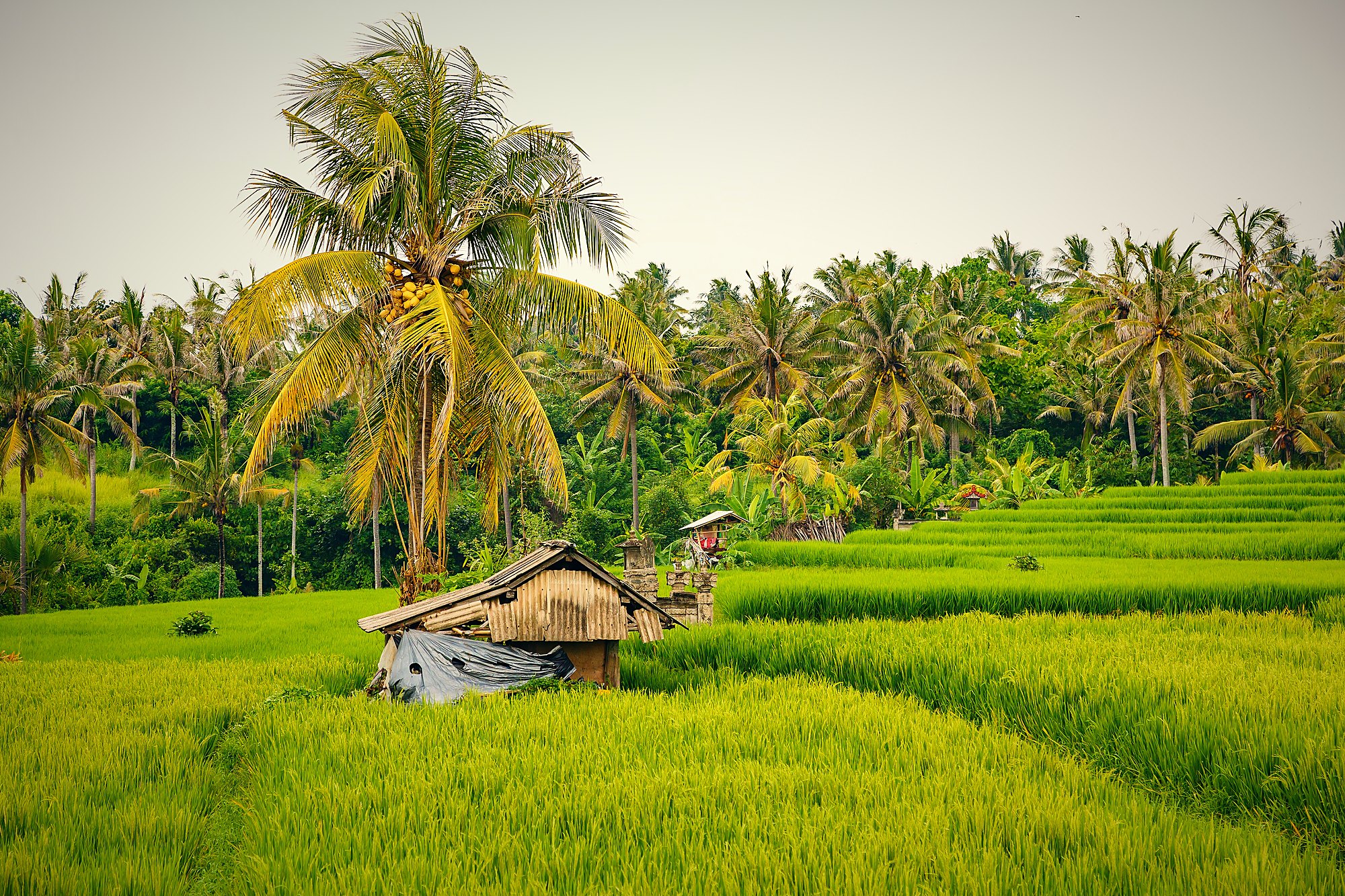
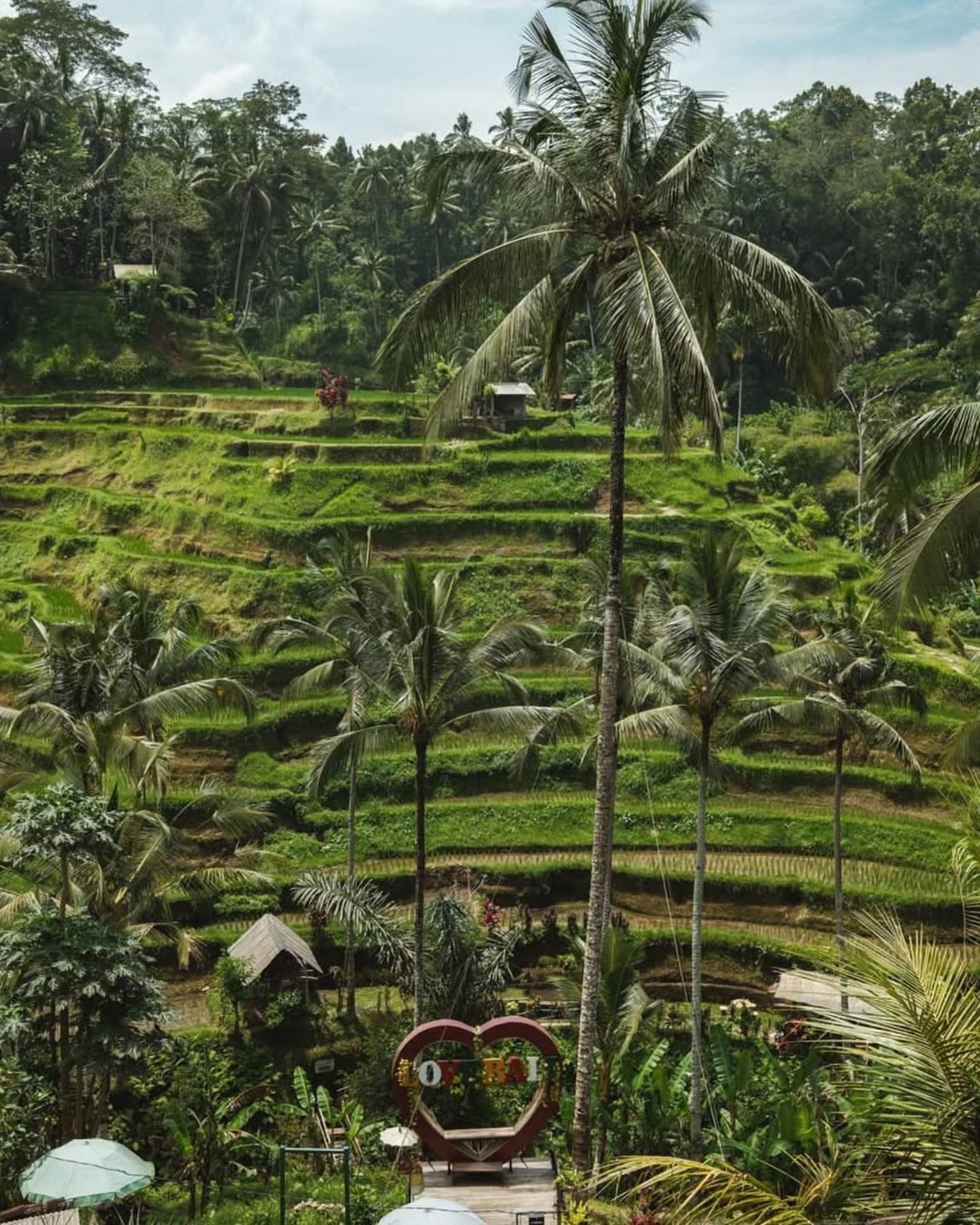
- See the rice terraces at their best. Jatiluwih and the Sidemen Valley are deep green in February. Go early, before the clouds close in, and wear shoes you do not mind getting muddy.
- Chase waterfalls, carefully. Falls such as Sekumpul and Tukad Cepung are at full power, but paths get slippery and some sites close after heavy rain because of flash-flood risk. Follow local advice and skip river canyons on stormy afternoons.
- Surf the east coast. In the wet season the wind blows offshore on the east side, so Keramas and the reefs off Sanur get the cleaner waves while the west coast is often blown out.
- Slow down in Ubud. Rainy afternoons are perfect for a cooking class, a Balinese dance performance at the Ubud Palace in the evening, or a long massage.
- Visit the water temples. Tirta Empul and Tirta Gangga are atmospheric in soft, cloudy light, and less crowded than in July.
What to skip or plan around: a sunrise climb of Mount Batur is possible but often clouded in, and fast boats to Nusa Penida and the Gilis are sometimes cancelled when the sea is rough. Keep a spare day in your plan.
Where to base yourself
Ubud is the natural base in February, with the rice fields, temples and craft villages on the doorstep and plenty to do indoors when it pours. Sidemen is a quieter alternative for a few nights among the terraces. If you want a beach, choose Sanur or Nusa Dua on the calmer, cleaner east and south coasts rather than Kuta or Canggu. Our where to stay in Bali guide compares the areas in more detail.
What to pack for February
- A light rain jacket or compact umbrella, and quick-dry clothes rather than cotton.
- Sandals or trail shoes with grip for wet temple steps and muddy paths.
- A dry bag for your phone and passport on boats and waterfall trips.
- Insect repellent: mosquitoes, and with them dengue, peak in the wet season. See our guide to mosquitoes and dengue in Bali.
- Reef-safe sunscreen, because the sun burns through cloud.
- A sarong and sash for temples.
For how February compares with the rest of the year, see Bali weather by month, and use our free itinerary builder to plan rain-proof days.
Frequently asked
Does it rain a lot in Bali in February?
Yes. February averages around 260 to 290 mm of rain on about 18 days, second only to January. Most rain falls as heavy afternoon or evening downpours, so mornings are often usable.
Is February a cheap time to go to Bali?
It is one of the cheapest months. After the Australian summer holidays end in early February, hotels and villas discount heavily, apart from a short bump around Chinese New Year on February 6, 2027.
Can you swim in Bali in February?
Yes, the sea is around 29°C. The east and south coasts, such as Sanur and Nusa Dua, are usually calmer and cleaner than the west-coast beaches, which collect seasonal debris.
Are there festivals in Bali in February 2027?
Chinese New Year falls on February 6, 2027, and the Balinese holy day Tumpek Krulut, honoring music and the arts, is on February 27. Temple anniversaries take place somewhere almost every day.

BALI 2026
The complete island guide: regions, temples, beaches, getting around, what to avoid and how to plan the perfect trip.

Bali on a Budget
How to see the best of Bali without overspending: where to stay, eat and explore for less.