The short answer: a battle nobody is meant to win
The Barong dance is Bali's best-known piece of sacred theater, a dance-drama in which Barong, a shaggy lion-like protector, faces Rangda, a fanged widow-witch who commands the dark forces of the night. On the surface it looks like a simple contest of good against evil. Watch closely and you notice something odd: the ending never really feels like a knockout. Rangda retreats, order returns, and everyone knows she will be back tomorrow.
That is the point. The Balinese do not imagine a universe in which evil is destroyed once and for all. They imagine one that has to be kept in balance, again and again, through ritual, offerings and performances exactly like this one. If you only see one traditional show in Bali, this is the one that explains the most about how the island thinks.
Who is Barong?
Barong is a guardian spirit, often called Banaspati Raja, the lord of the forest. In Balinese belief he is linked to the invisible spirit siblings who accompany every person through life, which is why many villagers think of him as something close to a guardian angel. The most common form, Barong Ket, is a lion-like creature with a carved, gilded mask, a curving beard of human hair, thick fur and a body glittering with small mirrors and leather ornaments. Two dancers move inside him, one working the head and jaws, one the hindquarters, and good dancers make him playful, vain and almost dog-like before he turns formidable.
There are other Barongs too. The Barong Bangkung is a wild boar paraded through villages around Galungan and Kuningan. The Barong Landung is a pair of giant figures, a dark-faced man and a pale-faced woman, and some villages keep tiger, elephant or dog forms. Between performances, a village's Barong mask is not a prop. It is kept in the temple, given offerings and treated as charged with real power.
Who is Rangda?
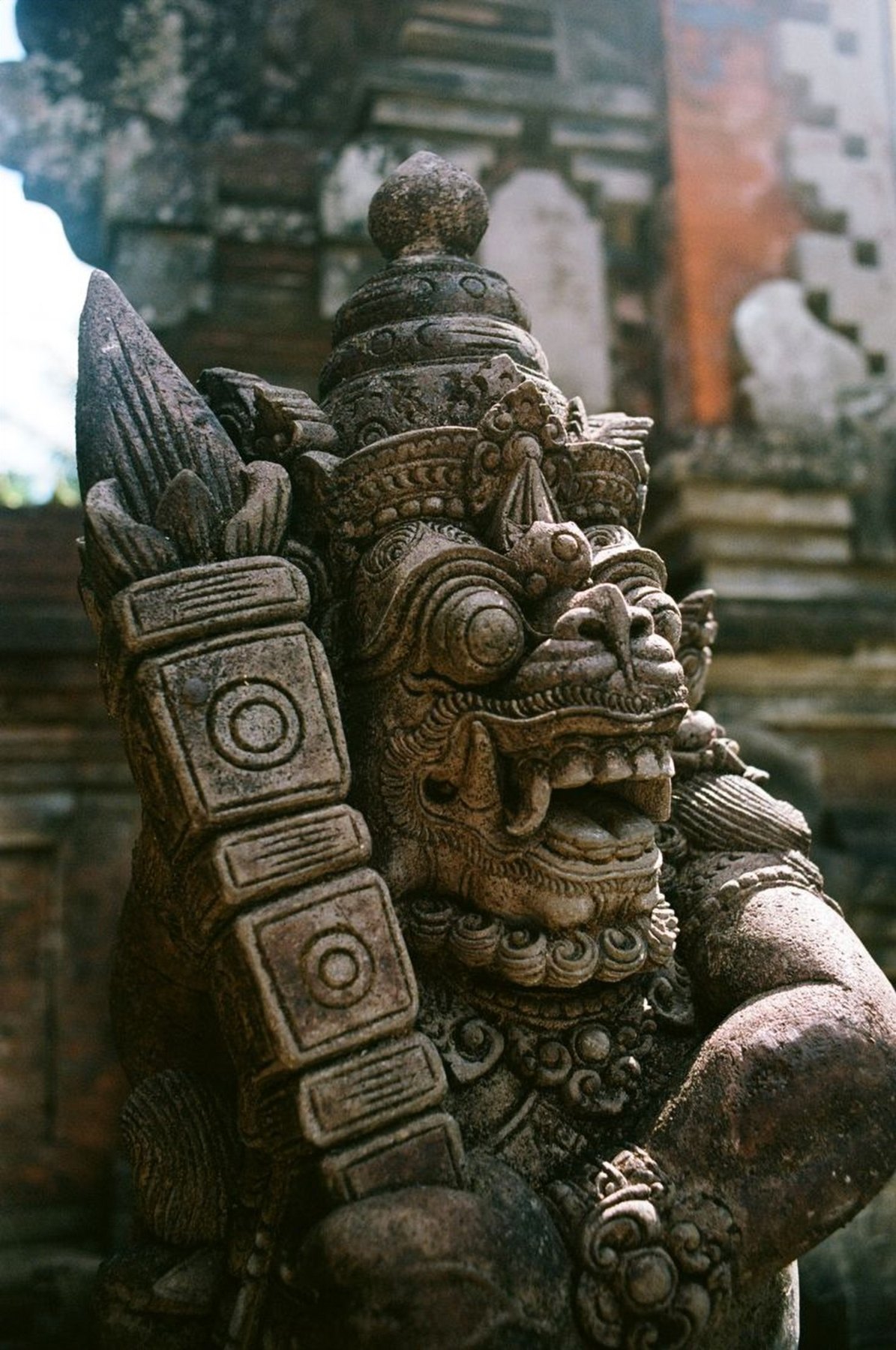
Rangda's name means widow in Old Javanese, and she is everything Barong is not: long pendulous breasts, a lolling tongue of fire, wild white hair, curling nails and bulging eyes. She is the queen of the leyak, the witches said to roam at night, and she haunts the graveyard temple. Yet she is not simply a devil. Rangda is also understood as a fierce aspect of Durga, the goddess of death and destruction, and her mask is just as sacred as Barong's. Many temples keep both, side by side.
The Calonarang legend behind the dance
The story most often told about Rangda is the Calonarang legend, set in eastern Java around the eleventh century, the age of King Airlangga. Calon Arang was a widow and sorceress whose daughter, Ratna Manggali, could find no husband because every man feared her mother. Enraged at the insult, Calon Arang called down a plague that swept the kingdom. Airlangga turned to the holy man Mpu Bharadah, who sent his disciple Mpu Bahula to marry the daughter. Bahula found the witch's book of magic, carried it to his master, and with its secrets Bharadah defeated her.
One Balinese version adds a twist that ties the legend directly to the island. Here Rangda is identified with Mahendradatta, the Javanese queen of the Balinese king Udayana and the mother of Airlangga himself, exiled for practicing black magic. It becomes a story about a son confronting his mother, which gives the drama an emotional weight that visitors rarely expect.
Rwa bhineda: why good never wins outright
The idea at the heart of the dance is rwa bhineda, the two that are different. Day and night, life and death, purity and pollution, Barong and Rangda: each needs the other, and the goal is balance rather than victory. You see the same idea every day in Bali in the black-and-white checked poleng cloth wrapped around shrines, statues and sacred trees. The squares are equal. Neither color takes over.
So when Rangda flees at the end of a performance, the audience is not watching evil die. They are watching harmony restored for now, which is exactly what offerings, temple festivals and exorcistic dramas like the Calonarang are meant to do.
The kris trance: the scene everyone remembers
The climax arrives when a group of men rushes Rangda with drawn kris, the wavy-bladed daggers that are sacred heirlooms in Balinese families. Rangda casts her spell and the men turn the blades on their own chests, pressing hard while they writhe and shout. Barong's protective power keeps the steel from piercing their skin. Afterwards a priest revives the dancers with holy water and, often, the smoke of incense and a sacrificed chick.
In tourist shows this scene is choreographed. In temple performances, the trance is real and considered genuinely dangerous: in February 2021 a teenage dancer died after a kris wound during a performance in Denpasar. Whatever version you watch, stay seated and quiet, never step into the performance space and do not use flash.
Where to watch the Barong dance
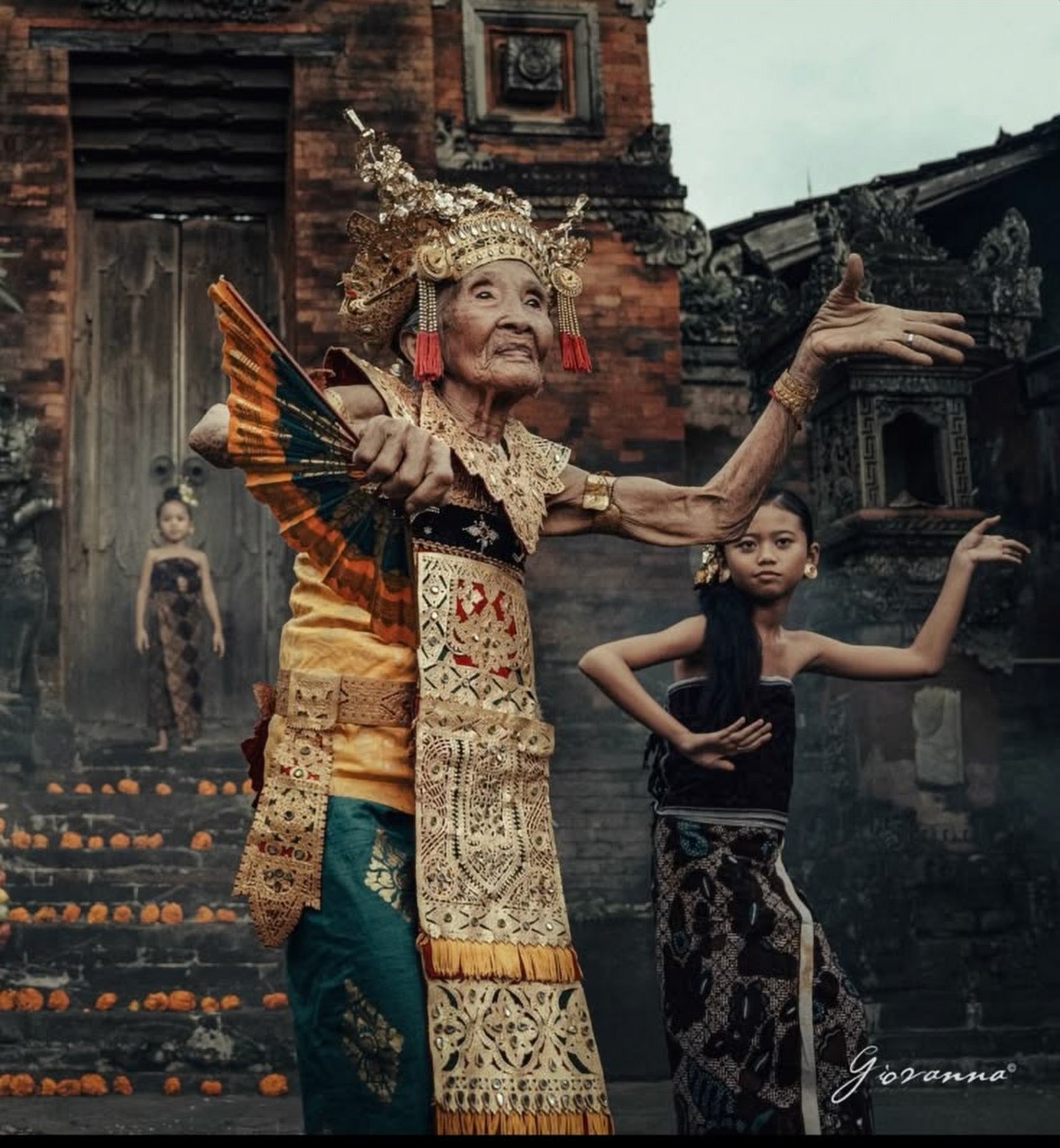
- Batubulan and Singapadu (Gianyar): The classic daytime show. Several stages on the main road just north of Denpasar run a Barong and Kris performance every morning, starting around 9:30 am and lasting about an hour. Tickets are typically around IDR 100,000 to 150,000 (roughly USD 6 to 9) at the door; check the current price. It is easy to combine with Ubud, Celuk silver village and Goa Gajah. The morning program usually adapts the story for visitors and splices in an episode from the Mahabharata, but the masks, gamelan and dancing are the real thing.
- Ubud: Most evenings, the stages around central Ubud, including the Ubud Palace and nearby temple courtyards, host dance performances from around 7:30 pm, with tickets usually near IDR 100,000. The program rotates between Legong, Kecak and Barong, so check the boards on the main street or ask your guesthouse which night features Barong.
- Kesiman (Denpasar): Known for its Barong traditions and temple performances.
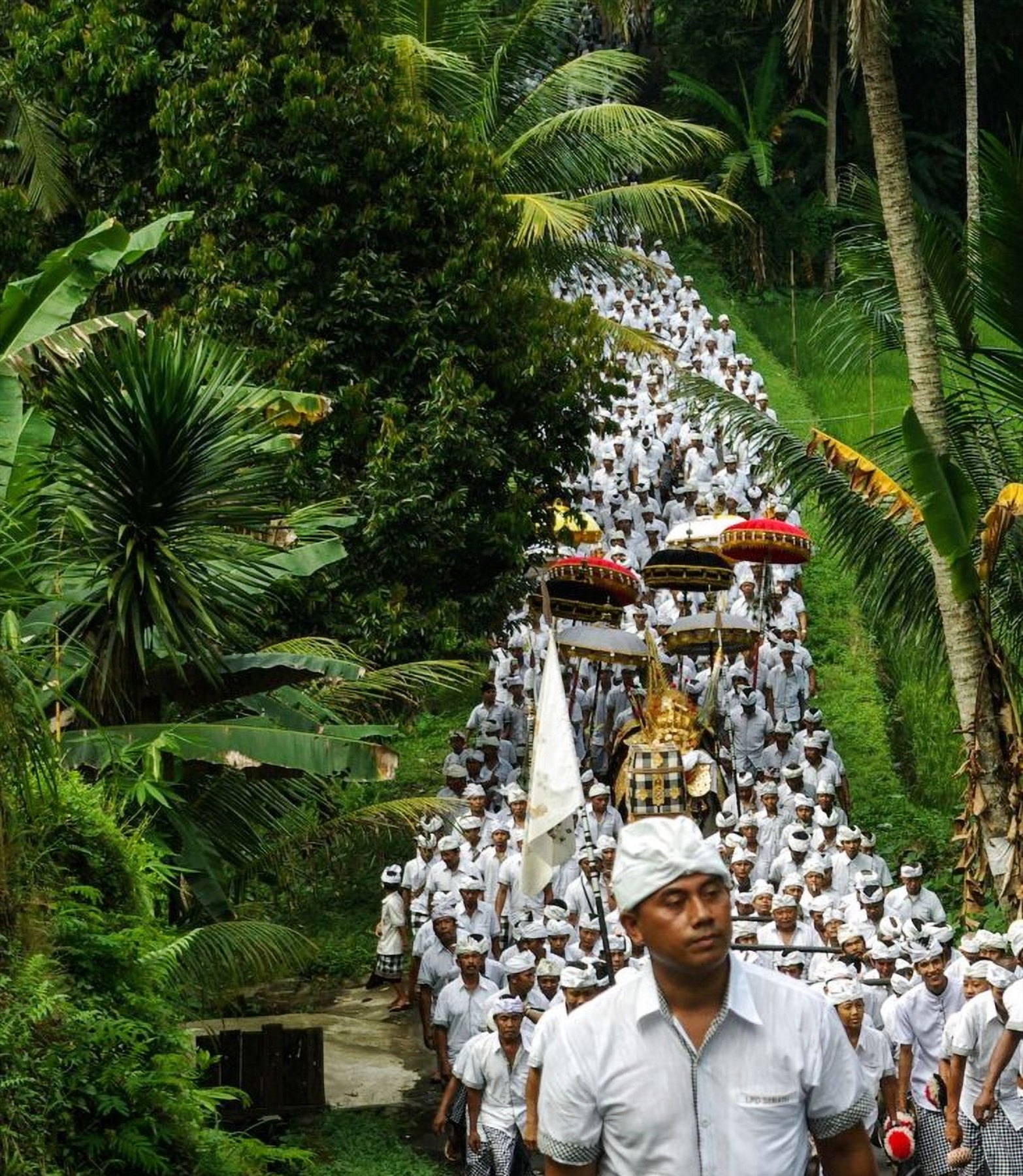
- Village temple festivals: The most powerful Calonarang performances happen late at night at village odalan, often near the death temple. If a Balinese friend invites you, go modestly dressed in sarong and sash, sit where you are told and expect it to run well past midnight.
Frequently asked
What does the Barong dance represent?
It dramatizes the endless struggle between Barong, a protective spirit, and Rangda, a witch-queen of dark forces. The goal is balance rather than total victory, an idea the Balinese call rwa bhineda.
Where is the best place to see the Barong dance in Bali?
Batubulan, just north of Denpasar, has daily morning performances from around 9:30 am. In Ubud, evening dance programs around 7:30 pm include Barong on some nights, so check the weekly schedule.
Is the kris dance real?
In tourist shows the kris scene is choreographed. In temple Calonarang performances, dancers enter a genuine trance, and accidents have happened.
Who is Rangda in Balinese mythology?
Rangda is a widow-witch and queen of the leyak, often linked to the goddess Durga and, in the Calonarang legend, to the sorceress Calon Arang. Her mask is considered as sacred as Barong's.

Bali Mythology
The gods, demons and legends behind Bali's temples and dances, from Barong and Rangda to the sacred mountains.