Which Gili is right for you
The short answer: Gili Trawangan if you want energy, restaurants, nightlife and the widest choice of dive shops; Gili Meno if you want quiet, a honeymoon pace and the best turtle snorkeling straight off the beach; Gili Air if you want a bit of both, with good cafes and a relaxed village feel. All three sit within sight of each other off the northwest coast of Lombok, and public and shared boats hop between them, so it is easy to split your stay.
None of the islands has motorized traffic. You walk, rent a bicycle or flag down a cidomo, the small horse-drawn cart that doubles as a taxi and a luggage carrier. The silence after a few days in southern Bali is the first thing most people notice.
Gili Trawangan: the lively one
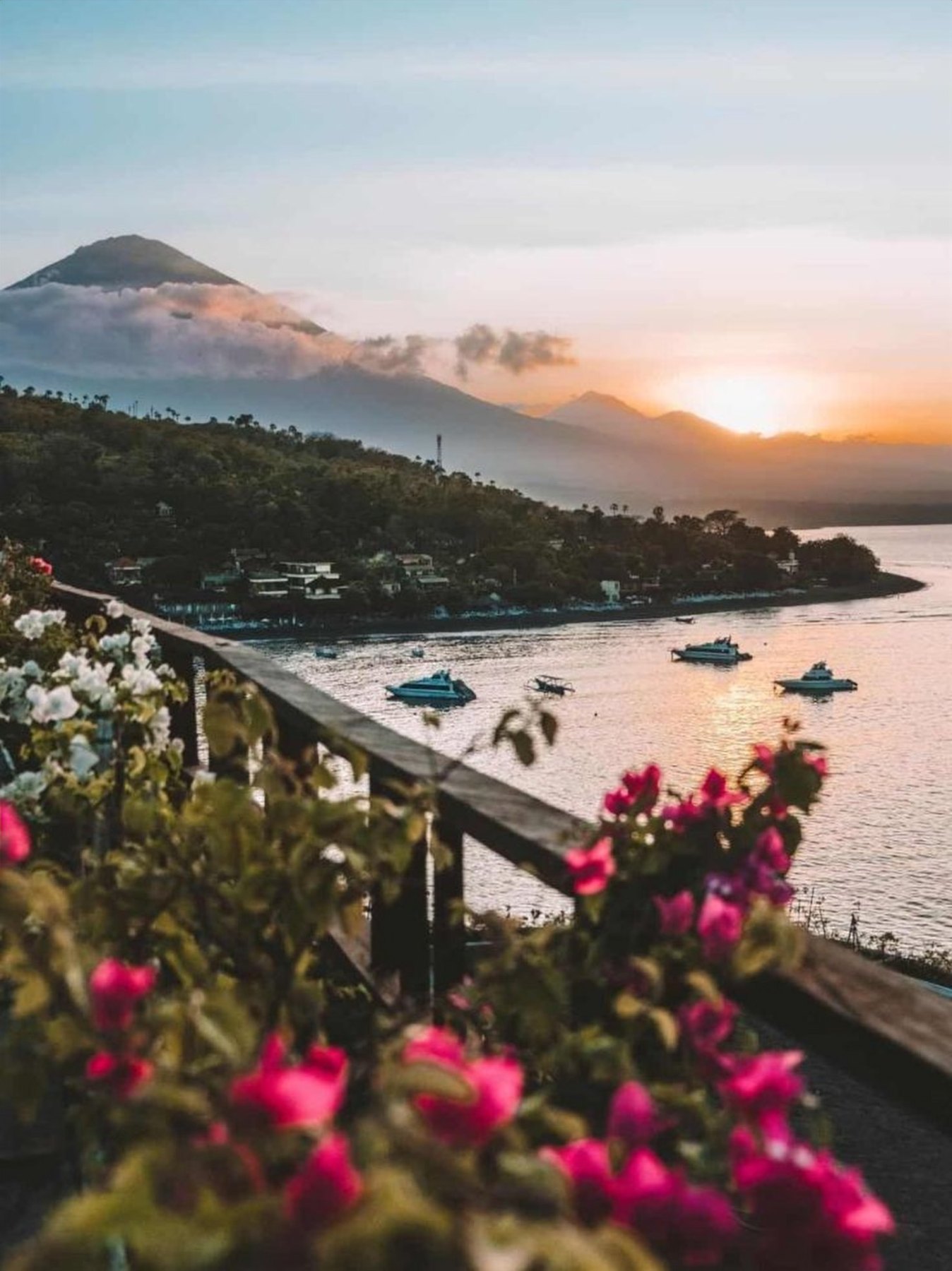
Trawangan, or Gili T, is the largest of the three and takes a few hours to circle by bicycle. The east coast near the harbor is the busy strip: dive centers, bakeries, night markets, beach bars and a party scene that rotates between venues through the week. The west side is calmer and faces the sunset over Bali's Mount Agung, and the island's small hill gives a wide view at dawn.
It suits groups of friends, first-time divers and anyone who likes having options at dinner. If you want quiet, stay at the north or southwest ends, away from the main strip, and bring earplugs if you book anywhere central.
Gili Meno: the quiet one
Meno is the smallest and least developed. There is no nightlife to speak of, the sand paths are soft enough that many people simply walk, and the evenings are about sunsets and long dinners. Accommodation ranges from simple bungalows to a handful of boutique resorts, and the east side near the harbor is the most practical base.
Meno is also the best island for snorkelers. Off the west coast lies Nest, a ring of life-size figures sculpted by Jason deCaires Taylor and sunk in 2017, now crusted with coral. It gets crowded in the middle of the day, so go early. Turtles are common along the reef edges around the island, though never guaranteed.
Gili Air: the in-between
Air sits closest to Lombok and has the most local life of the three, with a real village in the middle of the island. The south and east coasts hold most of the cafes, yoga studios and dive shops; the west and north are quieter and better for sunsets. It suits couples, families and slow travelers who want good food without the party.
Snorkeling with turtles
Green and hawksbill turtles feed on the seagrass and reef around all three islands. Shared snorkel boat trips, usually a few hours long and visiting spots off each island, are sold everywhere and are inexpensive; you can also swim out from the beach on Meno and parts of Air. Keep a respectful distance, never touch or chase a turtle, and avoid standing on coral at low tide.
Currents between the islands are strong. Do not try to swim from one island to another, and be careful of drifting while snorkeling off the beach on an outgoing tide.
Getting there from Bali
- From Padang Bai (east Bali): the main route. Fast boats take roughly 1.5 hours to Gili Trawangan, a little longer to Meno and around 2 hours to Air, with several operators and departures each morning. Fares start around IDR 270,000 to 350,000 (about USD 17 to 22) one way when booked online, and more for premium boats. Expect a small village or harbor fee of around IDR 15,000 to 20,000 in Padang Bai, paid in cash.
- From Serangan (near Sanur): convenient if you are staying in the south, but slower and pricier, roughly 2.25 to 3 hours and from around IDR 840,000 one way. Boats from Sanur itself take longer still, as they stop at Nusa Penida or Padang Bai on the way.
- From Amed (northeast Bali): a short crossing on smaller boats, roughly 1.25 to 2 hours, with only one or two departures a day. Check the current schedule, as this route has paused in the past.
- Via Lombok: fly from Denpasar to Lombok in about 45 minutes, then drive to Bangsal harbor and take a public boat (around IDR 23,000, leaves when full) or a fast boat (around IDR 85,000) for the 15 to 45 minute hop.
On arrival, the islands collect a small tourist or harbor fee, reported at around IDR 10,000 to 30,000 per person. Some boat tickets include it and some do not, so keep small notes in cash. This is separate from Bali's own tourist levy.
Safety and practical notes
- Choose the boat carefully. The Lombok Strait can be rough, especially in the afternoon and during the wet season. Larger, established operators handle the swell better, morning crossings are usually calmer, and you should check that life jackets are on board and accessible. Fast-boat accidents still happen in these waters, including a fatal capsizing off Sanur in August 2025, so do not board an overloaded boat in bad weather.
- Leave a buffer. Crossings are sometimes cancelled. Plan a night in Bali before an international flight.
- Watch what you drink. Stick to licensed bars and sealed drinks. The so-called magic mushroom shakes sold on Gili T are illegal under Indonesian drug law.
- Respect local customs. The islanders are mostly Muslim Sasak. Swimwear is fine on the beach, but cover up in the village and during Ramadan.
- Bring cash. There are ATMs on Gili T and Air, but they run dry in high season, and Meno has very few.
Two or three nights is enough for one island; five gives you time to try two. Many travelers combine the Gilis with Lombok's south coast and fly back to Denpasar, which avoids a second long boat ride.
Frequently asked
Which Gili island is best?
Gili Trawangan is best for nightlife and choice, Gili Meno for quiet and turtle snorkeling, and Gili Air for a relaxed middle ground with good cafes.
How long is the boat from Bali to the Gili Islands?
Fast boats from Padang Bai take roughly 1.5 to 2 hours. From Serangan or Sanur, expect 2.5 to 4 hours, and from Amed roughly 1.25 to 2 hours.
Is there an entry fee for the Gili Islands?
There is a small tourist or harbor fee of around IDR 10,000 to 30,000 per person, sometimes included in your boat ticket. Carry small cash just in case.
Are there cars or scooters on the Gilis?
No. Motorized vehicles are not used for getting around. You walk, cycle or take a cidomo, a horse-drawn cart.

Lombok
Острова Gili, Mount Rinjani, южное сёрф-побережье и культура сасаков.