The short answer
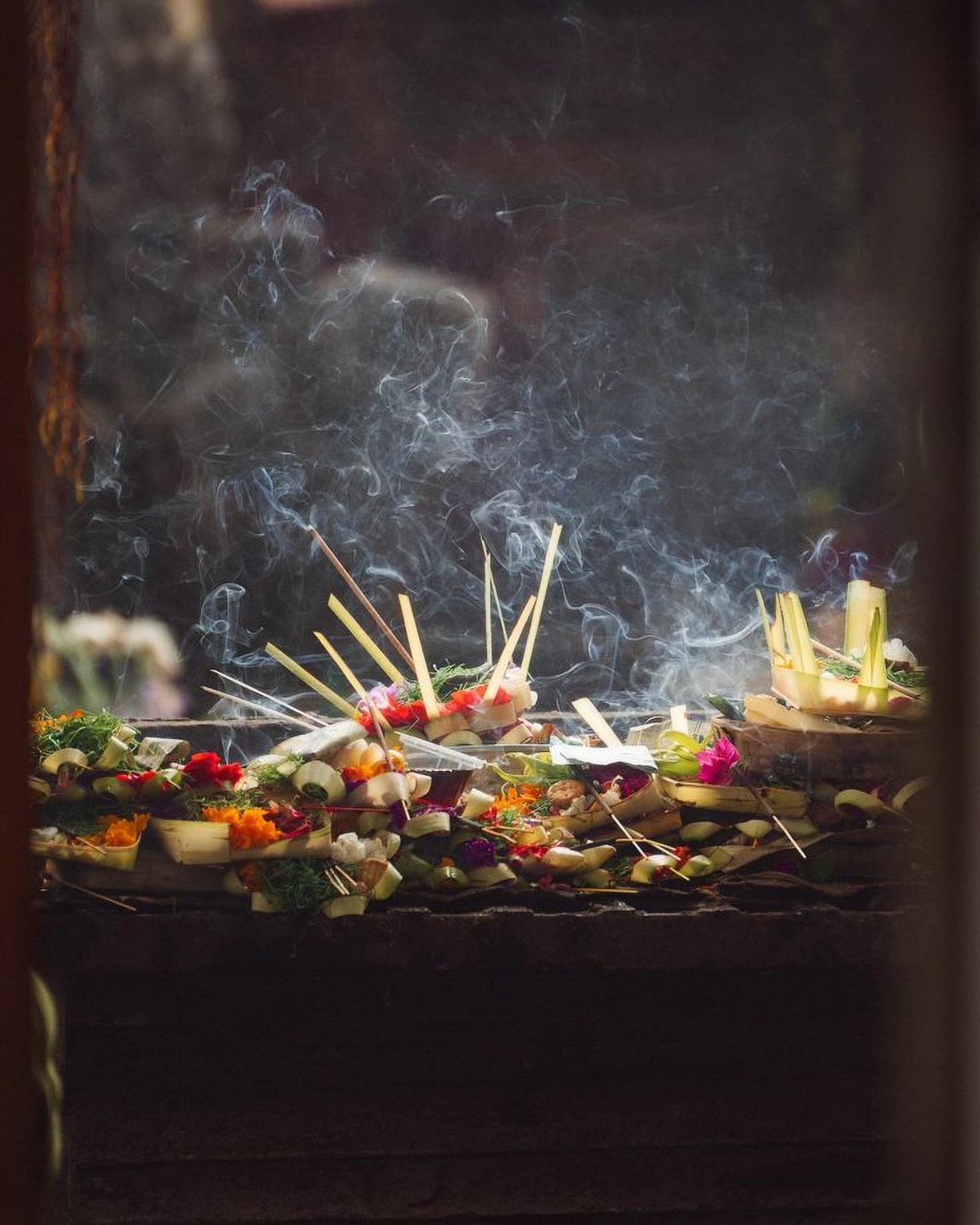
Those little palm-leaf trays filled with flowers, sitting on shop steps, dashboards, shrines and pavements, are canang sari, the most common daily offering in Balinese Hinduism. They are a small act of thanks to Sang Hyang Widhi Wasa, the supreme god, and to the forces that keep the world in balance. Most Balinese households place several every single day, and many businesses do too.
The name helps explain it. Canang is a small tray woven from palm leaf; sari means essence. The offering is the effort, the flowers and the moment of prayer, not the object itself. That is why a canang that took twenty minutes to make is left on the ground to wilt, be eaten by dogs or swept away the next morning. Its job is done once it has been offered.
What is inside a canang sari
Look closely and every canang follows a pattern.
- The tray (ceper). A small square or round base folded from young coconut leaf or banana leaf, pinned with bamboo slivers.
- The core (porosan). Tucked underneath, a folded betel leaf with lime and areca nut, representing the Hindu trinity: Brahma, Vishnu and Shiva.
- A little food. Often a pinch of rice, a slice of banana, a cracker or a sweet.
- The flowers. Arranged by color and direction, each one honoring a god.
- The finishing touches. A stick of burning incense, and sometimes a coin or small banknote placed on top.
What the colors and directions mean
The flowers are not decoration. They map the Balinese cosmos onto a tray the size of your palm, with each color placed toward the compass point of the god it honors:
- White, facing east, for Iswara.
- Red, facing south, for Brahma.
- Yellow, facing west, for Mahadeva.
- Blue or green, facing north, for Vishnu.
- Mixed petals (kembang rampai) in the center for Shiva.
Frangipani, marigold, hibiscus and cempaka are the usual flowers, plus shredded pandan leaf for fragrance. When a flower of the right color is out of season, a leaf or petal of a similar shade stands in.
Who makes them, and when
Making offerings is mostly women's work, passed from mother and grandmother to daughter. Girls start by learning to fold the simplest shapes, and the craft of weaving offerings has its own name, mejejaitan. In a traditional compound you will see women sitting together in the afternoon, folding trays for the next day and chatting.
Modern life has changed this. Many women now work full time, so it is common to buy ready-made trays or complete canang from vendors at the morning market. Nobody sees this as less sincere.
The daily rhythm usually looks like this:
- Morning. After the house is swept and before breakfast, the woman of the house places canang at the family shrine, the kitchen, the gate, the motorbike and anywhere else spirits gather.
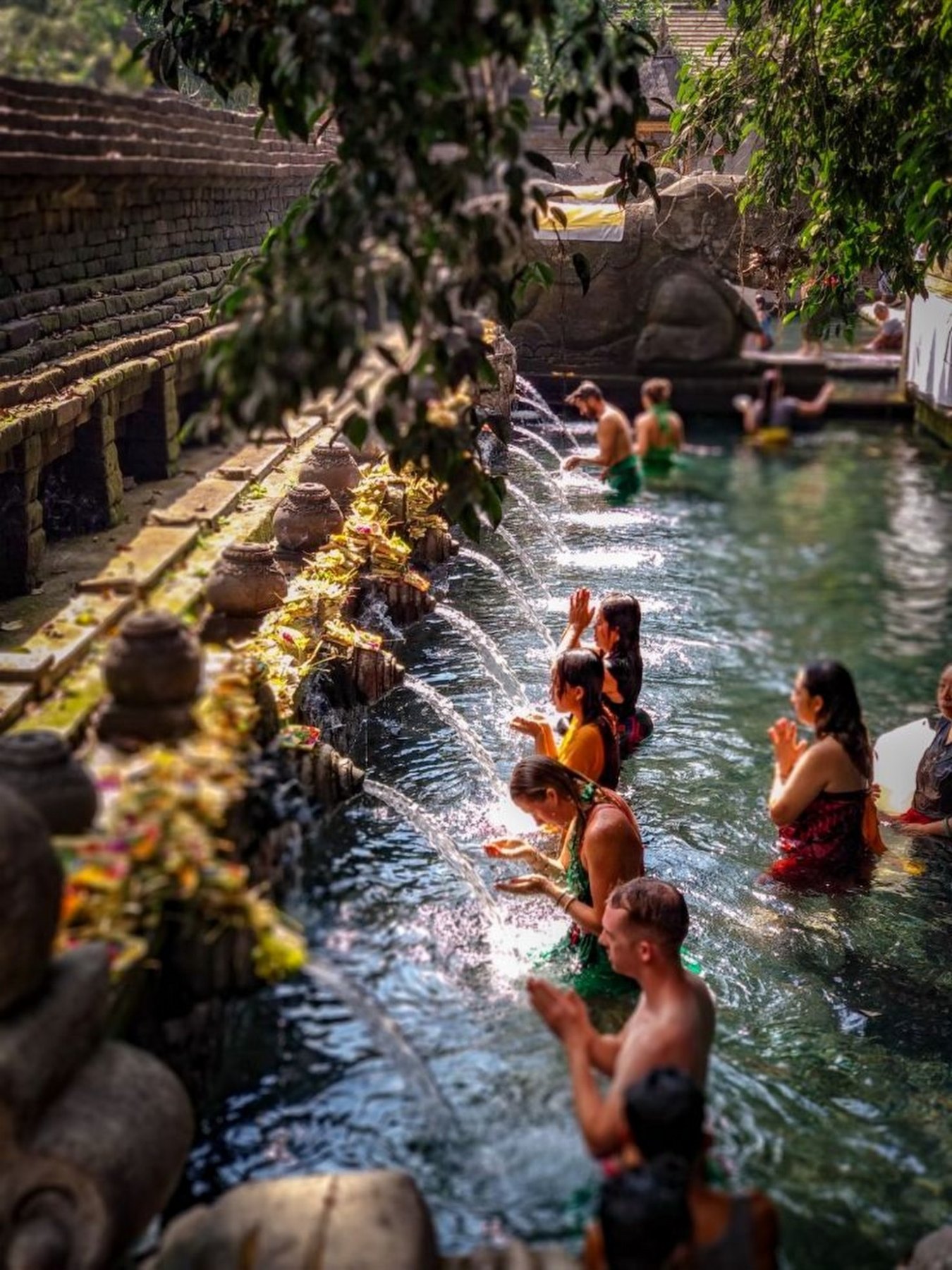
- The prayer. She lights incense, sprinkles holy water with a flower held between her fingers, and wafts the smoke toward the gods with a few flicks of the hand.
- Next day. Yesterday's offering is cleared away and a fresh one placed. An offering is presented only once.
On Kliwon days in the 210-day Pawukon calendar, and on full moon (Purnama) and new moon (Tilem), offerings tend to be larger. Canang are not offered when someone in the family or community has recently died.
High and low: offerings for gods and for demons
Not all offerings are for the gods. Balinese Hinduism is about balance, and the island has its share of restless forces: the bhuta kala, unruly spirits of the earth, elements and time. Offerings placed high, on shrines and altars, thank the gods. Offerings placed on the ground are meant to feed and calm the bhuta kala so they leave people in peace.
The ground offerings are called segehan. They are simpler than canang: small portions of rice, sometimes colored, with onion, ginger, salt and a little fish or meat on a square of banana leaf, often sprinkled with arak or rice wine. Seeing them on a street corner or at a crossroads is entirely normal.
You will also see:
- Banten saiban (ngejot), tiny portions of the day's cooked rice set out after cooking, before the family eats.
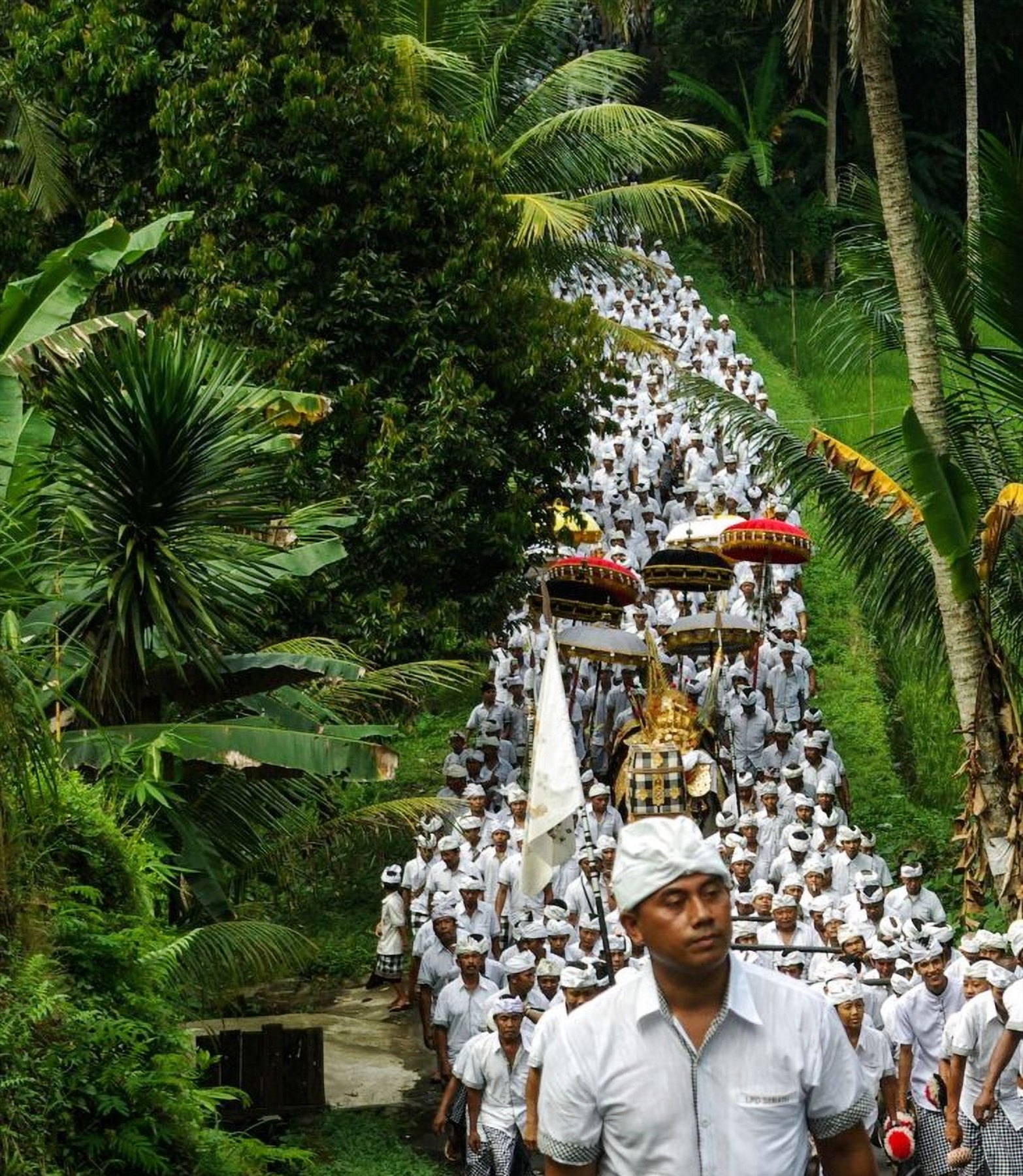
- Gebogan, towering stacks of fruit and cakes carried on women's heads to temple festivals.
- Daksina, a key offering at bigger ceremonies, with rice, a duck egg and coconut in a palm-leaf basket.
- Penjor, tall decorated bamboo poles curving over the road at Galungan.
Do not step on them, but do not panic
Try not to step on or over a canang, especially while the incense is still burning. Watch your feet at shop entrances and temple gates, and do not move or touch offerings. If you do accidentally kick one in a crowded lane, do not worry too much. Once an offering has been made and the prayer said, its spiritual essence has already been received, which is why locals walk past old ones without a second look and dogs help themselves to the rice.
A few more courtesies: do not photograph someone mid-prayer without asking, wait if a woman is placing offerings in front of a doorway, and never pick up the coins or notes left on top.
Why it matters
Canang sari are the most visible expression of Tri Hita Karana, the Balinese idea that well-being comes from harmony between people, nature and the divine. Millions of them are made every day, and each one is a small, quiet reminder that this island runs on gratitude as much as on tourism. Once you know what they mean, you will never walk past one without noticing again.
Frequently asked
What are the little offerings on the ground in Bali?
They are canang sari, daily Hindu offerings of flowers, food and incense on a palm-leaf tray. Offerings placed directly on the ground, often called segehan, are meant to appease unruly spirits known as bhuta kala.
What happens if you step on a canang sari?
Try to avoid it, especially while the incense is burning. If it happens by accident, locals understand; once an offering has been made, its essence is considered already received.
How often do Balinese make offerings?
Every day, usually in the morning. Many households place a dozen or more around the home, shop and vehicles, with larger offerings on full moon, new moon and Kliwon days.
What do the flower colors in canang sari mean?
Each color honors a god and faces a direction: white to the east for Iswara, red to the south for Brahma, yellow to the west for Mahadeva, and blue or green to the north for Vishnu.

Bali Culture Guide
Where Balinese Hinduism came from, how it is practiced today and the traditions every visitor should understand.