Is Tirta Empul worth it?
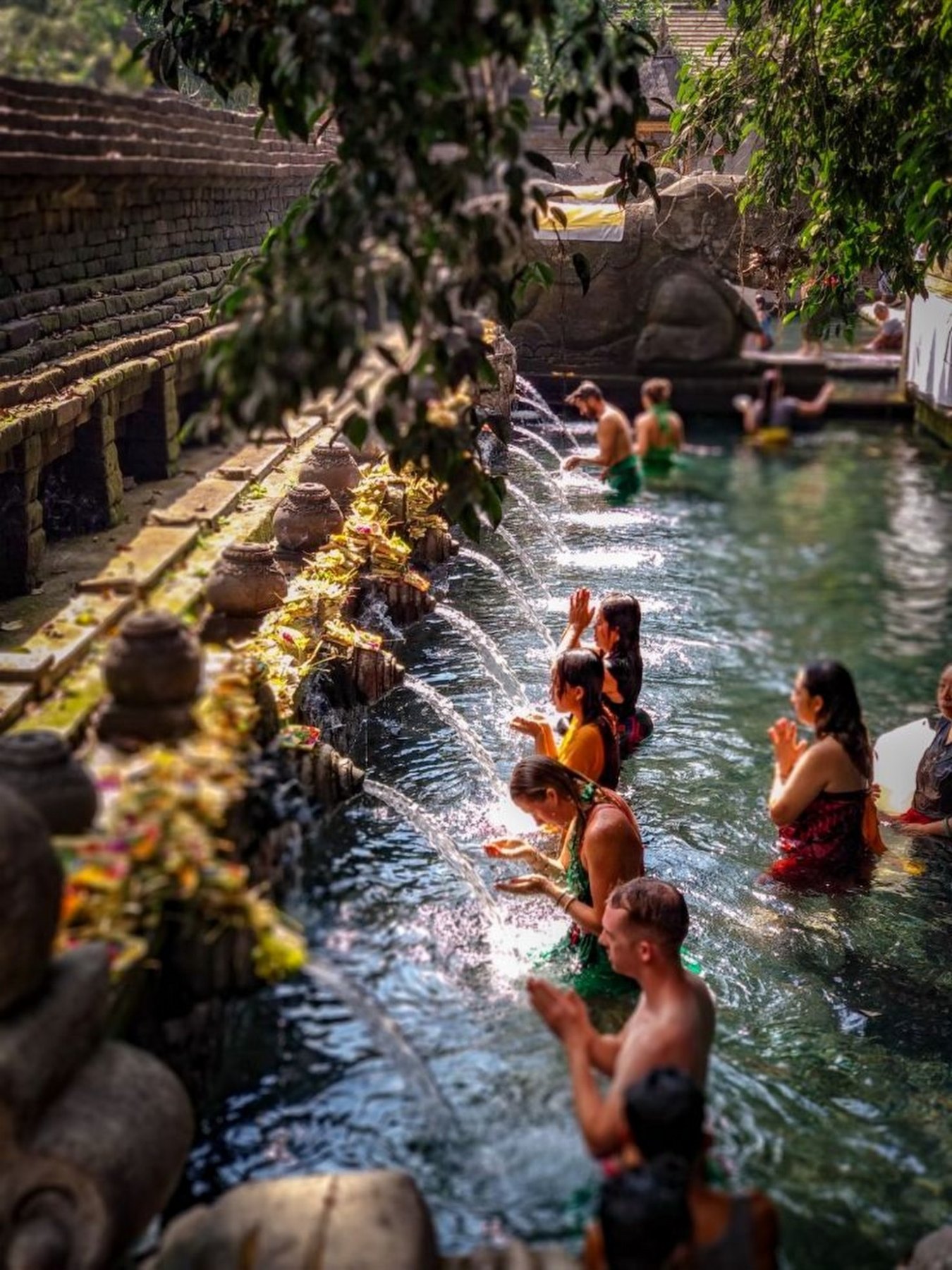
Yes, if you go early and take part rather than just watch. Tirta Empul, in Tampaksiring about 30-40 minutes north of Ubud, is one of the most important water temples in Bali. Balinese families still come here to cleanse themselves before big life events, after illness or bad luck, and on auspicious days. Standing waist-deep in cold spring water with them is one of the most memorable things you can do on the island.
It is also busy. By late morning the pools fill with tour groups, and the experience can feel more like a queue than a ritual. If crowds ruin things for you, two quieter alternatives sit nearby, covered below.
A little background
The temple was founded around a large spring in 962 AD, during the Warmadewa dynasty. Legend says the god Indra struck the earth to release the spring and revive his army after the demon king Mayadenawa poisoned them. That story explains why the water is believed to heal and purify. On the hill above the temple stands the villa built for President Sukarno's 1954 visit, still used as a state rest house.
The purification itself is called melukat. It is not a show for visitors; it is a living Balinese Hindu practice, and you are a guest in it.
What to wear and rent
You need to cover your legs to enter any Balinese temple. At Tirta Empul a sarong for walking around the grounds is included with your ticket or lent at the entrance.
To enter the water you need a separate bathing sarong, rented on site for a small fee, usually in the region of IDR 10,000-15,000. Swimwear underneath is fine; swimwear alone is not. Bring a towel and a full change of clothes, because you will be soaked. Lockers are available for valuables. No soap or shampoo goes in the water.
Women who are menstruating are asked not to enter the pools, following local custom.
How the ritual works, step by step
- Make an offering. Buy a canang sari at the entrance and place it at the small shrine beside the pools. Light incense and take a moment of prayer or quiet intention. Many visitors go with a guide or temple helper for this part.
- Enter the first pool. Step down slowly. The water comes straight from the spring and is cold.
- Start at the far left. Facing the spouts, begin with the first spout on the left and work your way to the right, one by one, joining the line behind local worshippers.
- At each spout: press your palms together and pause briefly. Then cup the water and wash your face three times, rinse your mouth three times, and finally put your head under the stream and let it run over you. Some locals sip a little; that part is optional.
- Skip the spouts reserved for the dead. Two spouts toward the end of the first pool are reserved for ceremonies for the dead, not for the living, and both Balinese and visitors pass them by. Staff and signs show which ones; if unsure, watch what the person ahead of you does.
- Continue to the second pool if it is open, repeating the same pattern from left to right.
- Finish with prayer. Many people end at the inner sanctuary, where a priest may bless them with holy water and rice.
The whole process, including changing and queuing, takes roughly 1.5-2 hours. Walking the grounds alone takes 30-45 minutes.
Entry fee, hours and getting there
Tirta Empul is open daily from around 8 a.m. to 6 p.m. Recent visitor reports put the entrance fee at around IDR 75,000 for adults (about USD 4.50) and IDR 50,000 for children, though some official listings still show the older price of IDR 50,000. Check at the gate. Parking costs a few thousand rupiah.
From Ubud it is about 40 minutes by car; from Canggu or Seminyak plan on 1.5-2 hours. Most visitors come with a private driver, often combined with Gunung Kawi Tampaksiring, the 11th-century rock-cut shrines a few minutes away, and the Tegallalang rice terraces.
Best time to avoid the crowds
- Arrive at opening, around 8 a.m. You will share the water mostly with locals.
- Or come after 4 p.m., when the day-tour groups have left.
- Avoid midday, the peak for tour buses.
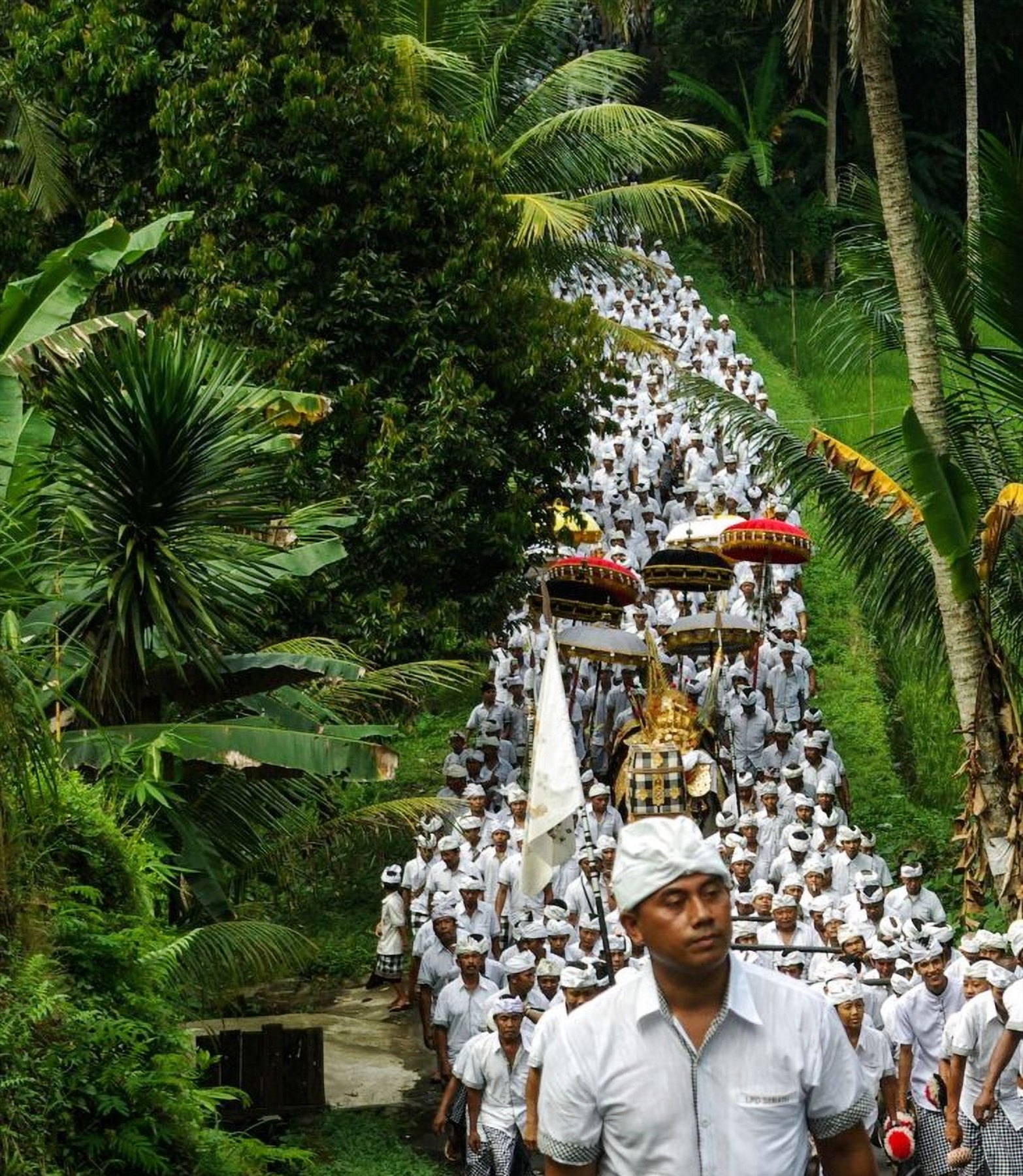
- Check the calendar. Full moon (Purnama), new moon (Tilem) and the temple's own anniversary bring big local crowds. These are beautiful to witness but not ideal for a first-time bath.
Quieter alternatives: Sebatu and Mengening
Pura Mengening, just 400-500 meters from Tirta Empul, is fed by the same sacred water source. The bathing area is smaller and calmer, with a very local feel. Entry is around IDR 30,000, with bathing sarong and locker around IDR 10,000 each. It is cash only.
Pura Gunung Kawi Sebatu, about 12-15 km north of Ubud near Tegallalang, is a beautiful water temple with koi ponds, shrines rising from the water and spring-fed bathing pools. Entry is around IDR 50,000 for adults with a sarong included, and a do-it-yourself melukat package with sarong, locker and offering costs roughly IDR 50,000 extra. It sees far fewer visitors than Tirta Empul.
Both follow the same etiquette: left to right, face, mouth, head, and quiet respect throughout.
A few rules worth respecting
Keep phones and cameras out of the water; photography at the sacred pool is discouraged and often not allowed. Do not swim, splash or pose. Speak quietly. Never point your feet toward shrines, and do not step over offerings. If a local family is mid-prayer at a spout, wait. Treat it as a ceremony, not an activity, and Tirta Empul is absolutely worth the trip.
Frequently asked
How much is the entrance fee for Tirta Empul?
Recent reports put it at around IDR 75,000 for adults and IDR 50,000 for children, though some official listings still show IDR 50,000. Bathing sarong rental and lockers cost a little extra.
Which spouts do you skip at Tirta Empul?
Two spouts toward the end of the first pool are reserved for death ceremonies, so both locals and visitors skip them. Follow the signs or the person in front of you.
What should I wear to Tirta Empul?
A sarong covering your legs to enter the temple, and a rented bathing sarong to enter the water. Swimwear underneath is fine. Bring a towel and dry clothes.
What is the best time to visit Tirta Empul?
Right at opening around 8 a.m., or after 4 p.m. Late morning and midday are crowded with tour groups, and full moon days bring large local ceremonies.

The Sacred Heart of Bali
Offerings, ceremonies, temple festivals and the unseen world that shapes daily life on the Island of the Gods.
Sources
- Pura Tirta Empul (Indonesia Travel, official)
- Exploring Tirta Empul Temple: Visitor's Guide, Entrance Fees, Hours (Bali Holiday Secrets)
- Tata Cara Melukat di Tirta Empul Bali dan 10 Aturan (Kumparan)
- Pura Mengening: The Peaceful Alternative to Tirta Empul (Bali Holiday Secrets)
- Gunung Kawi Sebatu Visitor Guide (Bali Holiday Secrets)
- Tirta Empul (Wikipedia)